

Choosing the right supplements for an aging dog or cat can make day-to-day life more comfortable—especially when joints feel stiff, focus seems off, or digestion gets sensitive. This guide covers the most useful options for mobility, cognitive dysfunction support, and digestive balance, plus a practical way to read labels and track results without overbuying.
How to choose supplements for aging pets
Start by matching the product to a real, trackable goal: easier rising, smoother stairs, fewer tummy upsets, or steadier sleep and awareness. The best results usually come from one targeted product used consistently, rather than a handful of overlapping formulas.
Next, read the label the way you’d check an ingredient list. Prefer products that list active ingredients and amounts (not only “proprietary blend”), include a lot number and “best by” date, and provide straightforward directions. If your pet has allergies or a sensitive stomach, choose limited-ingredient options and skip heavy flavoring, added sugars, and unnecessary dyes.
What good looks like on a label (without getting overly technical):
- Identity and accountability: a lot number and a clear “best by” date so the manufacturer can trace quality issues.
- Quality signals: third-party testing or a certificate of analysis (COA) that’s available upon request.
- Probiotic specifics: strain names listed (not just “probiotic blend”) and CFU guaranteed through expiration, not only “at time of manufacture.”
- Fish oil freshness cues: EPA/DHA amounts listed, packaging reduces light/air exposure, and the product is not harsh-smelling.
- Purpose-built formulas: avoid stacking products that repeat the same active ingredients (common with joint chews plus “skin and coat” oils plus calming blends).
Simple buying plan
- Pick one priority: joints, brain, or gut first.
- Set a timeline: many products need weeks of consistent use before you can judge whether they help.
- Track changes: note energy, mobility, appetite, stool quality, and sleep so you can make a clear keep-or-stop decision.
Safety note: follow label directions and get veterinary guidance if your pet has chronic conditions or takes long-term medications. When in doubt, bring the label (or ingredient list) to your next appointment so you can avoid ingredient overlap and potential interactions.
Joint support: mobility, comfort, and cartilage
Stiffness after naps, slower walks, and reluctance to jump are common reasons people look for a senior dog joint supplement or a cat-friendly mobility product. Joint formulas typically aim to support cartilage, joint lubrication, and the body’s normal inflammatory response.
Common joint-support ingredients and what they’re generally used for:
- Glucosamine: widely used for cartilage support and long-term joint maintenance.
- Chondroitin: often paired with glucosamine to support cartilage structure and resilience.
- MSM: commonly included for comfort and mobility support.
- Omega-3s (EPA/DHA): support joint comfort, skin, and overall wellness; look for EPA/DHA amounts listed.
- Green-lipped mussel: a natural source of joint-supporting compounds, often used in mobility blends.
- Hyaluronic acid: included in some advanced formulas to support joint lubrication.
What to buy depends on your pet’s starting point and tolerance. For mild stiffness, a basic glucosamine/chondroitin product may be a reasonable first step. For more noticeable mobility issues, look for a comprehensive joint blend that also includes MSM and/or green-lipped mussel.
Quick tip: If you’re adding omega-3s, store them properly (cool, dark place; tightly sealed) and avoid using oils that smell strongly rancid or look unusually cloudy for the product type.
Safety/interaction note: joint products can overlap with other “multi-support” chews, so double-check labels before combining. Also ask your veterinarian before using glucosamine in pets with diabetes or fish-based ingredients in pets with known seafood sensitivities.
Finally, remember that mobility isn’t only about supplements. Nail trims for better traction, supportive bedding, ramps/steps, and maintaining a healthy weight can make any joint plan work better.
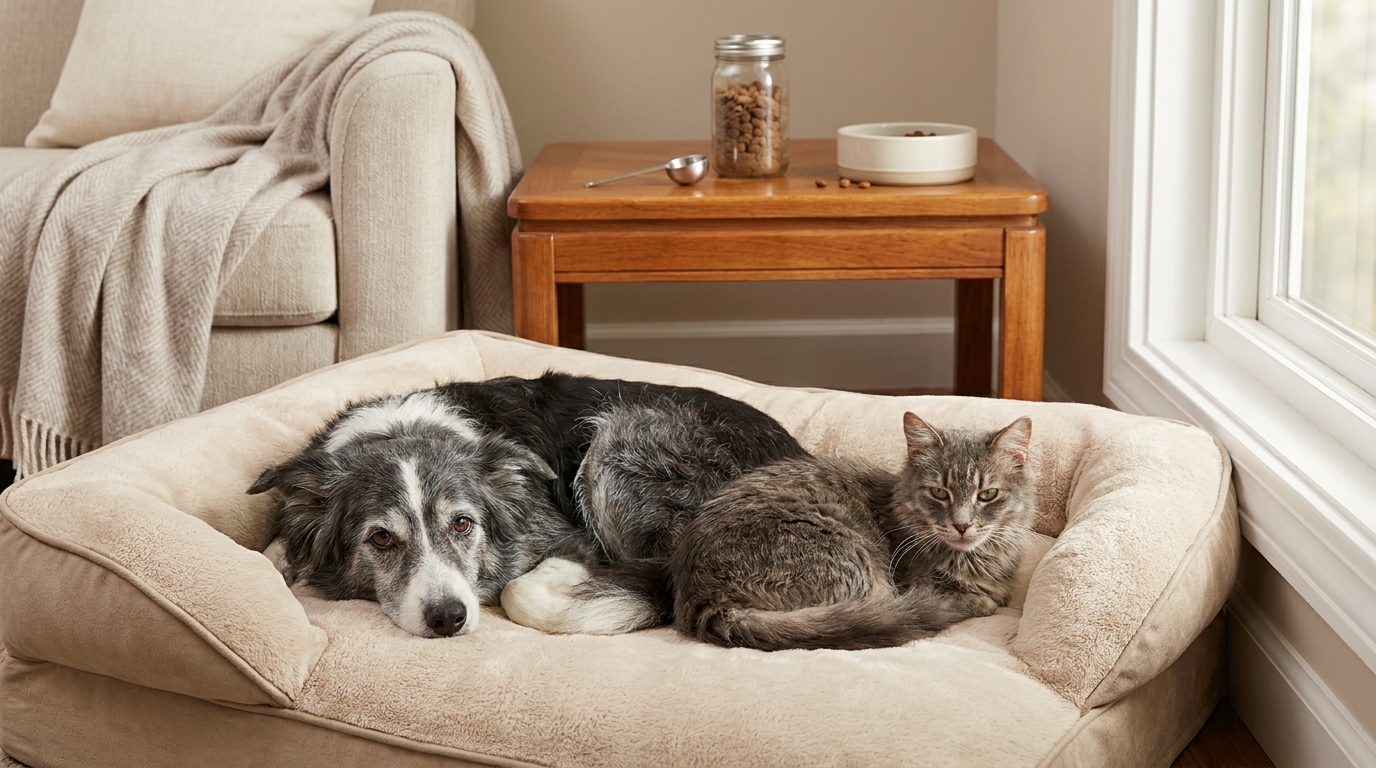
Brain support: cognition, calm, and focus
“Senior moments” can show up as pacing, staring, disrupted sleep, increased clinginess, or confusion in familiar spaces. Brain-focused support is typically designed to help cognitive function, oxidative balance, and steadier behavior as pets age.
Common ingredients you may see in cognitive support formulas:
- Omega-3s (DHA): important for brain structure and function.
- Antioxidants: ingredients like vitamins C and E that help support normal aging processes.
- Phosphatidylserine: used in some products to support memory and learning.
- Medium-chain triglycerides (MCTs): sometimes used to support brain energy metabolism.
- L-theanine: often used for calm focus without heavy sedation.
If your goal is nighttime restlessness, choose a formula aimed at calm and routine support rather than stacking multiple calming products. If your goal is alertness and engagement, look for DHA plus a small number of cognitive-support ingredients you can track.
Safety/interaction note: calming ingredients may increase sleepiness in some pets, especially if combined with other calming products or medications. Sudden or rapidly worsening confusion should be evaluated promptly, since medical issues can mimic cognitive aging.
Pair supplements with a simple daily “brain routine”: gentle training cues, food puzzles, predictable mealtimes, and short enrichment sessions. This makes changes easier to notice and measure.
Gut support: digestion, stool quality, and immune support
Many older pets develop more sensitive digestion over time. Gut-focused supplements can support stool quality, regularity, and the gut-immune connection.
The big three categories to know:
- Probiotics: beneficial microbes that help maintain a healthy gut balance. For a cat probiotic or dog probiotic, look for specific strains listed and colony counts guaranteed through expiration.
- Prebiotics: fibers that feed beneficial bacteria (often listed as inulin, FOS, or MOS).
- Digestive enzymes: may support breakdown of food components for pets that seem gassy or have inconsistent stools.
Choose based on symptoms you can observe. For inconsistent stool or after a diet change, a probiotic plus prebiotic blend is a common starting point. For gas and food-sensitivity signs, an enzyme blend may be worth considering—ideally without a long list of added flavors.
Safety/interaction note: probiotics are generally well tolerated, but pets who are immunocompromised or seriously ill should only use them under veterinary direction. Any supplement that causes vomiting, worsening diarrhea, or appetite loss is a reason to pause and reassess.
Consistency is key: introduce any new product gradually and avoid changing foods and supplements at the same time, so you can pinpoint what helps.
Cats vs. dogs: what changes with age-support supplements
Many ingredients overlap, but cats and dogs often differ in what they’ll accept (and tolerate) day to day. Matching format to your pet can prevent wasted purchases and reduce tummy trouble.
- Palatability is often harder for cats: strong odors, fishy oils, or bitter powders can lead to food refusal. Cat-friendly options are usually smaller soft chews, tiny capsules, or powders designed to mix smoothly.
- Texture and unit size matter: large capsules and thick oils can be difficult for small dogs and most cats. Smaller units or measured pumps/toppers can be easier to use consistently.
- Common sensitivities: some pets get loose stool from rich oils, new fibers, or switching probiotic products too quickly. Simple formulas are easier to troubleshoot.
- Behavioral feedback looks different: dogs may show improvement as more willingness to walk or play; cats may show it as more grooming, easier jumping to low surfaces, or less hiding after naps.
Format tip for picky pets: if chews are rejected, consider a powder you can mix into a small amount of food, or a capsule you can open and sprinkle (if the label allows). For oils, start with a tiny amount mixed thoroughly so the smell doesn’t trigger refusal.
Checklist: introduce supplements safely and track results
Supplements are easiest to evaluate when you change only one variable at a time. Use this checklist to introduce a new product with fewer surprises.
- Confirm the goal: pick one main target (mobility, cognition, or stool quality).
- Follow the label: use the product as directed and avoid “extra” amounts.
- Start low and go slow: introduce gradually so you can spot intolerance early.
- Keep routines steady: avoid switching foods, treats, and supplements all in the same week.
- Watch for side effects: vomiting, diarrhea, appetite changes, itchiness, new gassiness, or unusual sleepiness are signs to pause and reassess.
- Track before-and-after notes: stairs, jumping, getting up from naps, stool consistency, nighttime waking, and interest in play.
- Recheck labels when reordering: ingredients and concentrations can change; lot numbers and expiration dating should still be present.
Frequently Asked Questions
How many supplements should I give my senior pet at once?
Usually, one targeted product is the most practical place to start. Add a second only if you can clearly track the benefit of the first and you’re not doubling up on the same active ingredients across products.
How long does it take to see results?
Some digestive supports can change stool quality within days, while mobility and cognitive support often take several weeks of consistent use. Keep notes so you can judge progress realistically and avoid “guessing” based on a good or bad day.
What should I avoid when buying supplements for older pets?
Avoid unclear blends that don’t list amounts, products with lots of fillers or sweeteners, and stacking multiple formulas that repeat the same actives. If your pet already uses other health products, simpler single-purpose options are easier to combine safely.
When should I talk to a veterinarian before starting a supplement?
Check in before starting if your pet has chronic conditions (including kidney or liver disease, or diabetes), if they take long-term medications, or if cognitive changes appear suddenly or worsen quickly. Also ask for guidance if your pet has a history of pancreatitis or fat intolerance before adding fish oil, since rich oils can trigger digestive upset in prone pets.
Next steps: choose one goal (joint comfort, brain support, or gut balance), pick a format your pet will reliably take, and follow label directions with veterinary guidance when needed. A simple, consistent plan is usually more effective than buying multiple products at once.