

Figuring out how much you should walk your dog can feel like guesswork, especially when every breed has different energy levels and exercise needs. The right amount of daily walking keeps your dog physically fit, mentally stimulated, and far less likely to develop destructive behaviors. These five practical rules will help you build a walking routine that actually works for your dog's age, size, and health.
Rule 1: Match Walk Length to Breed and Size
Not every dog needs the same amount of exercise. A Border Collie or Dalmatian bred for endurance work will thrive on 60 to 90 minutes of walking per day, while a Bulldog or Shih Tzu may be perfectly content with two shorter 15- to 20-minute outings.
High-energy working breeds and sporting breeds generally need at least an hour of walking daily, split across two sessions. Toy and brachycephalic (flat-faced) breeds do better with shorter, gentler walks to avoid overexertion.
If you're unsure where your dog falls, a good starting point is 30 minutes twice a day. Observe how your dog behaves afterward — still restless and pacing means they likely need more, while heavy panting and reluctance to move suggests you should scale back.
Rule 2: Adjust for Your Dog's Age
Puppies have bursts of wild energy, but their growing joints and bones can't handle long walks. A widely used guideline is five minutes of structured walking per month of age, up to twice a day. So a four-month-old puppy would get about 20 minutes per session.
Adult dogs in good health can handle longer, more vigorous outings. This is the life stage where you can push closer to breed-appropriate exercise targets and add variety like jogging or hiking on mixed terrain.
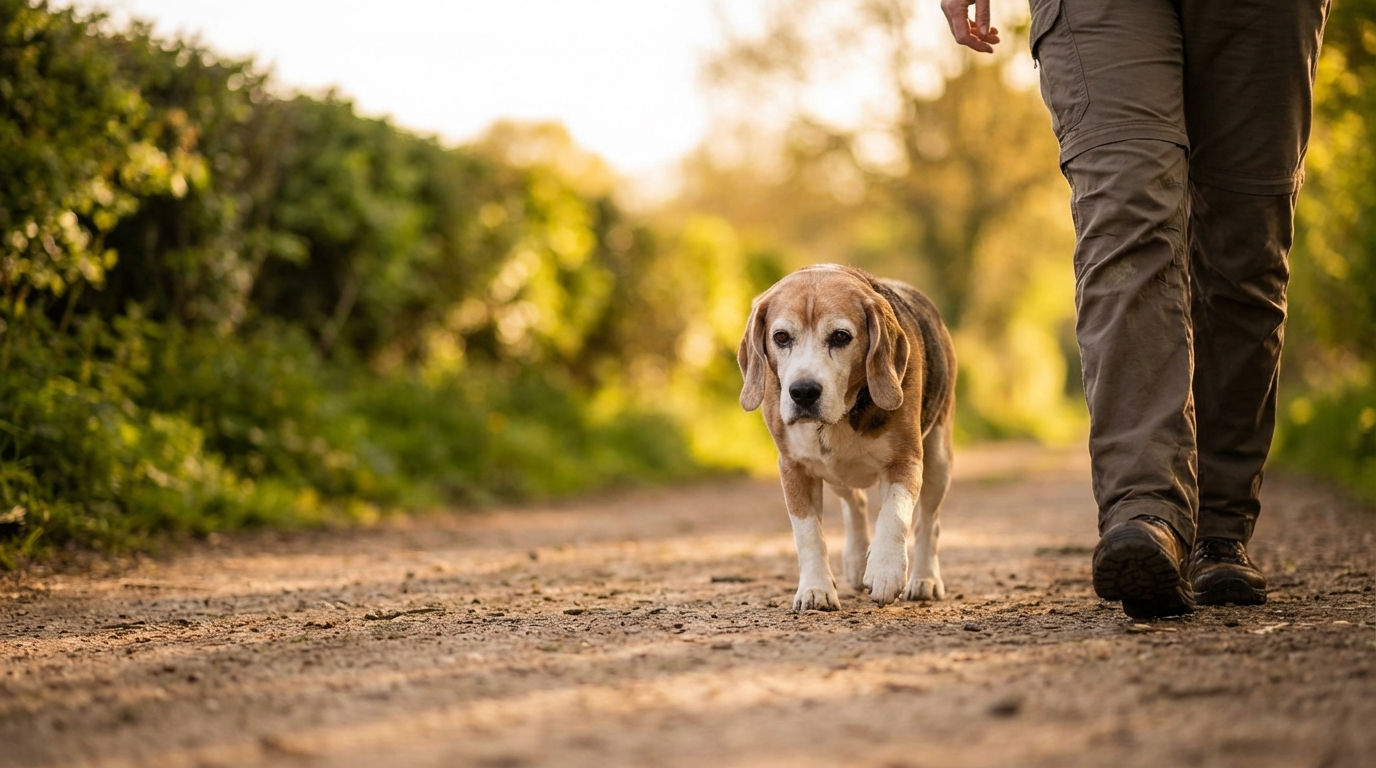
Senior dogs still benefit enormously from daily walks, but they may need a slower pace and shorter distance. Joint stiffness, arthritis, and reduced stamina are common, so let your older dog set the tempo. Two gentle 15-minute walks often work better than one long one.
Quick tip: Carry water on every walk, regardless of the weather. Dogs dehydrate faster than you'd expect, especially during brisk exercise. A collapsible bowl clips easily to any leash.
Rule 3: Watch Your Dog's Signals
Your dog will tell you when a walk is too much or not enough — you just need to know what to look for. Excessive panting, lagging behind, or lying down mid-walk are clear signs of fatigue. Limping or favoring a paw could indicate pain or injury.
On the flip side, a dog that returns from a walk and immediately starts zooming around the house, chewing furniture, or barking at nothing probably hasn't burned enough energy. Destructive behavior is one of the most common symptoms of under-exercised dogs.
Weight is another honest indicator. If your dog is gaining weight despite a balanced diet, they likely need longer or more frequent walks. If they're losing weight or seem constantly exhausted, ease off and reassess.
Rule 4: Prioritize Consistency Over Intensity
A 90-minute weekend hike doesn't make up for five days on the couch. Dogs thrive on routine, and their bodies respond best to regular, predictable exercise rather than occasional marathon sessions.
Aim for at least two walks every single day. Morning and evening outings give your dog structure, reliable bathroom breaks, and essential mental stimulation from sniffing and exploring their environment. Sniff time is not wasted time — it's a critical part of your dog's mental enrichment.
If your schedule is tight, even a brisk 15-minute walk is better than skipping entirely. You can supplement with indoor games, puzzle feeders, or backyard play on busier days, but nothing fully replaces the experience of an actual walk.
Rule 5: Keep Your Dog Protected on Every Walk
Every time your dog steps outside, they're exposed to fleas, ticks, and other parasites lurking in grass, soil, and shared paths. Regular walks are essential for health, but they do increase your dog's contact with these common threats.
Staying on top of flea and tick prevention ensures that daily exercise doesn't come with unwanted hitchhikers. A consistent parasite prevention routine is just as important as the walking routine itself.
Don't forget internal parasites either. Dogs that spend time outdoors regularly should be on a reliable worming schedule to guard against intestinal worms picked up from contaminated environments. Keeping both external and internal protection current means your dog can enjoy every walk without added risk.
Frequently Asked Questions
Is one walk a day enough for most dogs?
For most healthy adult dogs, one walk a day is the bare minimum — but two is strongly recommended. Splitting exercise into morning and evening sessions better manages energy levels and provides more consistent mental stimulation throughout the day.
Can you walk a dog too much?
Yes, over-walking is a real concern, especially for puppies, senior dogs, and breeds prone to joint issues. Signs of over-exercise include prolonged panting, stiffness after resting, reluctance to start the next walk, and worn or bleeding paw pads.
What counts as a good walk for a dog?
A good walk isn't just about distance — it should include time for your dog to sniff, explore, and engage with their surroundings. Varying your route regularly adds novelty and keeps the outing mentally stimulating, which tires a dog out just as effectively as physical exertion alone.
Building the right walking routine for your dog is one of the simplest ways to keep them happy and healthy for years to come. If you have concerns about your dog's exercise tolerance or joint health, it's worth a quick chat with your vet. Browse our full range of dog health products to make sure your walking buddy stays protected on every outing.