

A clear puppy vaccination schedule helps you protect your new dog during the months when their immune system is still developing. The most reliable approach is to plan ahead, book key visits, and stay consistent with booster shots so your puppy vaccine series stays on track.
This guide breaks down what typically happens at each stage, what to bring to appointments, how to handle missed boosters, and how to align vaccines with everyday parasite prevention.
How a puppy vaccine plan works
Puppies start life with some temporary immune protection passed from their mother. That protection fades over time, which is why most vaccines are given in a series rather than as a single shot.
Your clinic will recommend core vaccines for widespread, serious diseases, plus non-core options based on lifestyle and risk (for example, group training, boarding, grooming, daycare, or frequent exposure to unfamiliar dogs). The goal is simple: build reliable immunity before your puppy is likely to encounter germs in the real world.
Important: Vaccine schedules can vary based on the product used, veterinary protocol, and local requirements. In higher-risk settings (such as frequent boarding or high-contact environments), your veterinarian may recommend additional boosters or optional vaccines to close gaps in protection.
To stay organized, keep a written record of each visit date, the vaccine(s) given, and the next due date. Many owners also coordinate the schedule with essential basics from a puppy supplies checklist so nothing gets missed during busy weeks.
Typical puppy shots timeline (by age)
Every puppy is different, but many clinics follow a similar pattern: a first vaccine visit, follow-up boosters spaced a few weeks apart, then a final puppy booster to lock in protection. If you are mapping out a puppy vaccine series, use the timeline below as a practical expectation-setter and confirm dates with your clinic.
- 6–8 weeks: Often the first vaccine appointment. Many puppies also get a general health check and a plan for deworming and parasite control.
- 10–12 weeks: Booster visit. Your puppy’s protection is building, but they are usually not fully covered yet.
- 14–16 weeks: Final puppy booster in the initial series for many protocols. This is a key milestone for longer-lasting immunity.
- 6–12 months: A “one-year” booster is commonly recommended to maintain protection into adolescence and adulthood.
If you adopt an older puppy with an unknown history, the clinic may restart or adjust the series. That is normal—what matters is getting to a complete, documented course rather than guessing.
Core vs. non-core vaccines (quick guide)
Veterinary teams often describe vaccines in two buckets: core (recommended for most dogs) and non-core (recommended based on risk). Your veterinarian will help you decide what fits your puppy’s daily life.
Core vs. non-core at a glance: Many puppies receive a DHPP series (a combination vaccine) plus rabies. Non-core options may include vaccines for Bordetella, leptospirosis, canine influenza, and Lyme, depending on exposure risk. Rabies timing varies by location and is legally required in many areas, so your clinic will schedule it based on the rules that apply to you.
When you hear “boosters,” it usually means follow-up doses that help the immune system build and maintain protection. Some vaccines are boosted during the puppy series, then again at the one-year visit, and later on an adult schedule your veterinarian will outline.
What to expect at vaccine visits
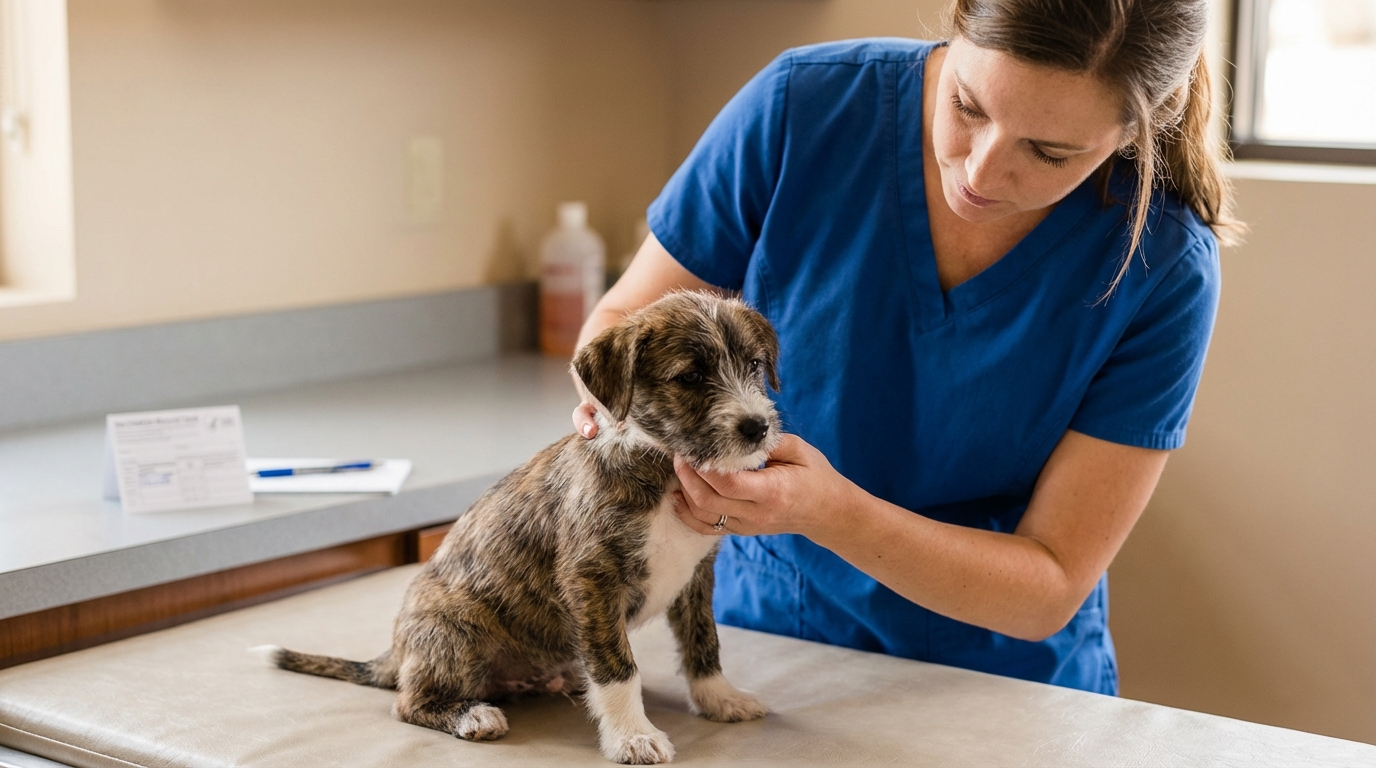
A vaccine appointment is usually quick, but it is more than just an injection. Expect a brief exam (ears, eyes, heart, lungs, skin, weight, and overall development) plus questions about appetite, stools, energy, and behavior.
Bring any paperwork you have from the breeder or shelter, and note any reactions your puppy had to previous vaccines (even mild ones). It also helps to bring high-value treats so your puppy learns the clinic is a good place.
Bringing vaccine records home: Ask for a copy of your puppy’s vaccination record after every visit and store it somewhere easy to find (a folder, a photo on your phone, or a dedicated pet binder). Helpful details to look for include:
- Date administered and the next due date
- Vaccine name (for example, whether it was DHPP and which non-core vaccines were included)
- Manufacturer and lot/serial number (important if there is ever a product question)
- Clinic name and veterinarian or staff signature/initials
Many owners use these visits to ask practical questions about teething, socialization, and when it is safe to start training classes. It is also a good time to confirm your ongoing parasite-prevention plan so there are no gaps.
After-care, side effects, and missed doses
Most puppies feel normal after vaccines, though mild tiredness or brief soreness can happen. Some may be a little quieter for a day, eat slightly less, or be sensitive at the injection site.
Call the clinic promptly if you notice concerning signs like facial swelling, repeated vomiting, trouble breathing, or extreme lethargy. Keep your puppy indoors and comfortable, offer water, and avoid strenuous exercise until they are back to their usual self.
If you miss a booster: Do not panic—just rebook as soon as possible. A delayed booster may affect how well immunity builds, especially during the early puppy vaccine series when timing matters. In many cases, your veterinarian can continue the series without starting over, but sometimes a catch-up plan is needed (for example, if the gap is longer than recommended or if the puppy is older and starting late).
Catch-up basics: Bring any records you have, share your best estimate of prior dates, and expect your clinic to set a new schedule with clearly labeled due dates. If records are incomplete or unclear, restarting certain vaccines is often safer than guessing—your veterinarian will guide you.
Pairing vaccines with parasite prevention
Vaccines and parasite prevention work best as a team: vaccines target specific infectious diseases, while parasite prevention helps protect your puppy from common external and internal pests that can cause discomfort and health complications.
At a high level, many prevention plans include three categories:
- Flea and tick prevention: Helps reduce itching, skin issues, and exposure to tick-borne problems.
- Heartworm prevention: Often paired with routine testing as recommended by your veterinarian.
- Deworming/intestinal parasite control: Puppies commonly need repeat deworming based on age, risk, and stool testing.
Because puppies grow quickly, prevention often needs regular check-ins to ensure the product and size range still fit. It is smart to set reminders and keep supplies on hand—especially during the first year when routines are still forming.
If you are stocking up, start with essentials like a gentle shampoo, nail clippers, and preventive care items from our puppy supplies section. Having everything ready makes it much easier to stay consistent with your puppy’s overall health plan.
Frequently Asked Questions
How many vaccine visits will my puppy need?
Many puppies have a starter visit followed by one or two boosters a few weeks apart, then a booster later in the first year. The exact number depends on your puppy’s age at the first appointment, the products used, and your clinic’s protocol.
Can my puppy meet other dogs before the series is finished?
It depends on the setting and the dogs involved. Many owners choose controlled, low-risk interactions with healthy, fully vaccinated dogs rather than high-traffic areas until the final puppy boosters are complete. Your veterinarian can help you balance socialization needs with disease risk.
What if my puppy had shots before I brought them home?
Ask for written records showing dates and vaccine names, then share them at your first appointment. If records are incomplete or unclear, your clinic may recommend a catch-up schedule so your puppy is not left under-protected.
Is rabies always part of the plan?
Rabies vaccination is commonly included, but timing varies and it is legally required in many areas. Your clinic will schedule it according to the rules that apply to you and your puppy’s age.
Do non-core vaccines matter if my puppy stays home most of the time?
Sometimes yes. Risk is not only about travel—group classes, grooming, boarding, visiting friends with dogs, or frequent exposure to unfamiliar dogs can change what is recommended. Talk through your routine with your veterinarian so the plan matches your puppy’s real-world exposure.
Ready to plan ahead? Browse our puppy supplies to support your pup’s first-year health routine, and chat with your vet about the best timing for your dog’s specific vaccine needs.