

Puppy socialization is easiest—and often most effective—when you start early. The first 16 weeks are a key time when your puppy’s brain is primed to file new people, pets, places, and sounds under “safe.” Miss that window and you can still make progress, but it often takes more time, structure, and patience.
What the early socialization window really means
The puppy socialization window is a short developmental phase when new experiences are absorbed quickly and with less fear. During this time, your puppy is building a “normal” database: what humans look like, how traffic sounds, what a leash feels like, and how other animals behave.
Socialization isn’t about forcing greetings or collecting as many interactions as possible. It’s about creating calm, positive exposures at a pace your puppy can handle. Think quality over quantity: one relaxed visit to a new place beats five frantic, overwhelming stops.
A helpful way to think about socialization is: exposure + safety + repeat. Your puppy notices something new, nothing scary happens, and you practice again later until it becomes routine.
Why the first 16 weeks matter most
In the early weeks, puppies are more open to novelty and less likely to interpret unfamiliar things as threats. That makes it an ideal time to introduce the building blocks of adult life: handling, grooming, travel, household noises, and friendly people of different ages and appearances.
After this period, puppies commonly become more cautious. If they haven’t seen umbrellas, bicycles, or visitors at the door, they may respond with barking, hiding, or lunging—not because they’re “bad,” but because they’re unsure. Early learning helps your puppy stay curious instead of concerned.
- Confidence: Puppies who practice calm exposures often recover faster from surprises.
- Behavior: Early work can help reduce fear-based reactivity and prevent problem habits from forming.
- Handling tolerance: Gentle practice with paws, ears, collars, and brushing pays off for life.
- Everyday flexibility: A puppy comfortable with crates, carriers, and car rides is easier to take places.
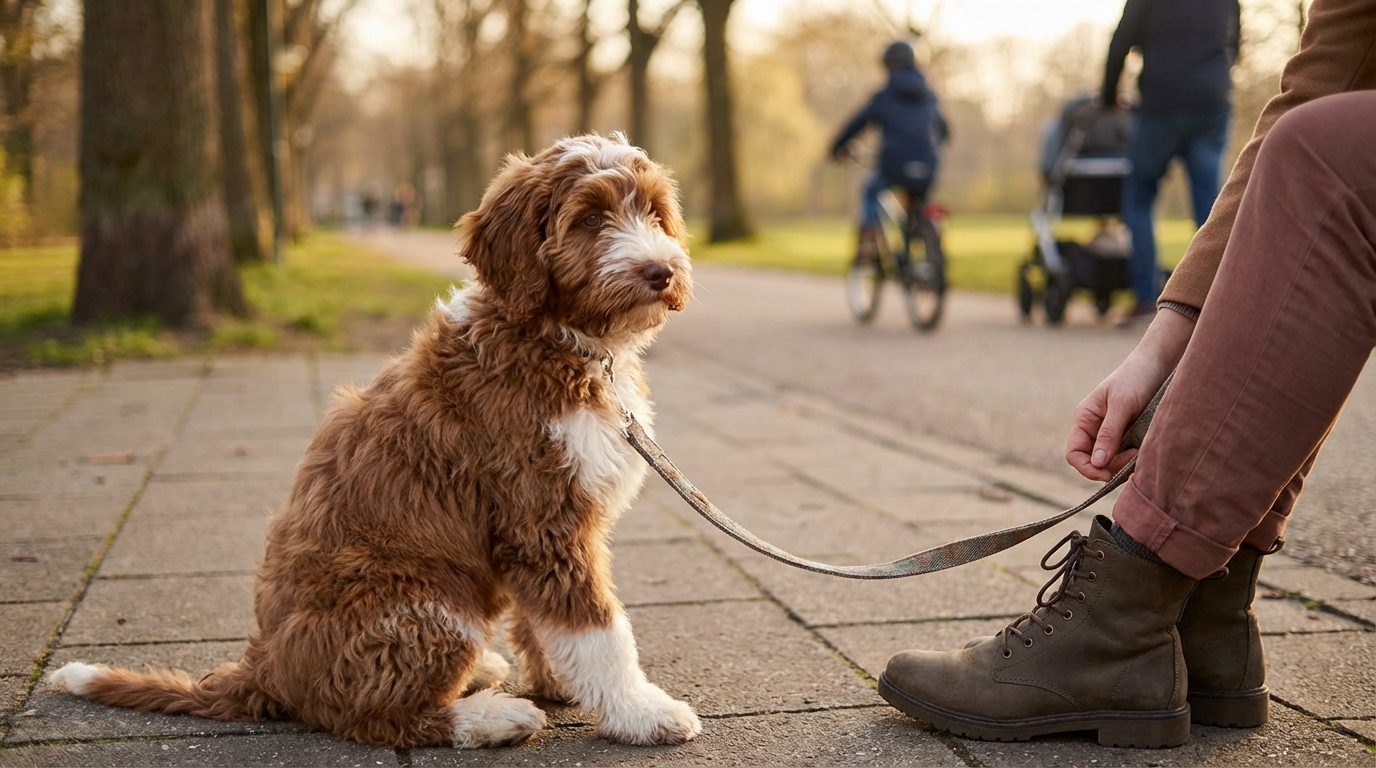
How to socialize your puppy safely (a simple plan)
To socialize your puppy safely, aim for short, controlled sessions your puppy can “win.” Your job is to keep the experience predictable, reward calm behavior, and give your puppy an easy exit when they’ve had enough.
Start with a weekly checklist and repeat exposures until they’re boring. Rotate categories rather than doing everything at once.
- People: Different heights, hats, sunglasses, uniforms; calm greetings only.
- Places: Calm sidewalks at a distance, quiet open spaces, pet-friendly stores where allowed, friends’ homes.
- Sounds: Doorbell, vacuum, hair dryer, kids playing, delivery noises (low volume first).
- Surfaces: Grass, gravel, rubber mats, metal grates, slippery floors (use treats to build confidence).
- Handling: Brief touch to ears, paws, tail; pair with treats and stop before your puppy squirms.
A simple weekly plan example: aim for 3–5 short exposures per week (5–10 minutes each), with repeats built in. For example: two “people” sessions, one “sounds” session, and one “places” session—then repeat the easiest one again. If your puppy stays relaxed, slowly add one new item the next week. If your puppy struggles, keep the same plan and lower the intensity (more distance, less noise, shorter duration).
Keep gear and rewards ready so you can say “yes” to opportunities. Stock up on everyday essentials like a properly fitted collar, harness, chew options, and cleanup tools from our puppy supplies collection.
Quick tip: If your puppy won’t take treats, freezes, or tries to escape, you’re too close or the situation is too intense. Increase distance, lower the volume, or end the session on a calm note.
Not every exposure needs direct contact. Your puppy can learn a lot by calmly watching the world from a safe distance, then leaving before they get tired or overwhelmed. That “end early” habit is one of the fastest ways to build confidence.
Common mistakes that can backfire
Early socialization should feel safe and upbeat. These common missteps can create negative associations—especially during the most sensitive weeks.
- Flooding: Forcing your puppy to “get used to it” by staying in a scary situation. Fear doesn’t fade when your puppy feels trapped; it often gets worse.
- Too many greetings: Letting everyone pet your puppy or allowing chaotic dog meet-and-greets. Calm, brief interactions build better habits than constant excitement.
- Uncontrolled dog parks: Unpredictable dogs can overwhelm a puppy and teach defensive behaviors. Choose known, gentle dogs instead.
- Skipping recovery time: Puppies need naps. An overtired puppy is more likely to bite, bark, and struggle with self-control.
Watch body language: loose posture, soft eyes, and a wiggly body usually mean your puppy is okay. Tucked tail, pinned ears, yawning, lip-licking, or turning away can signal stress. When you see those signs, create space and lower the difficulty.
Parasite prevention: the foundation for safer outings
Socialization often means more time outdoors and around other animals—exactly where parasites can be picked up. A consistent prevention routine helps protect your puppy as you explore new environments and supports worry-free practice with routines like grooming and handling.
Plan outings around health basics, not just convenience. Follow your veterinarian’s recommended vaccine and parasite-prevention schedule, and ask what public areas are appropriate at your puppy’s current stage. Puppies who are unvaccinated or partway through their vaccine series may need more conservative choices (like controlled visits to trusted homes or watching the world from a clean, low-traffic spot) rather than high-contact areas where many unknown animals have been.
Make parasite protection part of your “going places” checklist: check coat and skin after outings, keep bedding clean, avoid letting your puppy sniff or eat unknown droppings, and stay consistent with preventatives as directed by your vet. When you’re gathering essentials, our puppy supplies section can help you stay stocked on basics for training, cleanup, and everyday care.
Also plan your social calendar around your puppy’s comfort. Short trips, cleaner play areas, and supervised interactions set you up for better experiences—so your puppy learns that the world is safe, not scary.
Frequently Asked Questions
What if my puppy is older than 16 weeks—did I miss my chance?
No. Early weeks are the easiest time to build positive associations, but older puppies can still learn with patient, gradual exposure and consistent rewards. Go slower, keep sessions short, and prioritize calm observation over direct interaction.
How many new experiences should I aim for each week?
Try 3–5 exposures per week and repeat them until your puppy looks bored (in a good way). Repetition is what builds confidence. If you’re busy, even three small sessions—like a calm “watch the world” moment, a short handling practice, and a low-volume sound session—can make a real difference when you keep it consistent.
How do I know I’m doing puppy socialization the right way?
You’re on track when your puppy can notice new things and quickly return to relaxed behavior—sniffing, taking treats, and responding to you. If your puppy escalates to panic, refuses food, or can’t settle, reduce intensity and add distance next time.
Ready to set your puppy up for confident adventures? Browse our puppy supplies to support training, travel, and daily care, and talk with your vet if you’re unsure what prevention schedule fits your puppy’s lifestyle.