

The Russian Blue cat stands out for its plush blue-gray coat, bright green eyes, and quietly devoted personality. If you want a low-drama companion that bonds deeply without demanding constant attention, this breed is a strong fit. Below is a practical look at temperament, home setup, grooming, enrichment, and everyday health priorities.
Russian Blue overview: size, coat, and personality
A Russian Blue cat is typically medium-sized with a lean, athletic frame and a distinctive double coat that feels dense and plush. The coat’s silvery sheen can make the fur look almost glittered in bright light, but it’s still relatively low-maintenance compared to longer-coated breeds.
Many owners describe this breed as calm, observant, and routine-loving. They’re often affectionate with their favorite people but not usually the type to greet every visitor like an extrovert. If you value a tidy, quiet household companion, this breed’s style tends to match.
- Best for: People who want a loyal, gentle cat with a predictable routine
- Coat: Short, dense double coat; moderate shedding
- Energy: Moderate—bursts of play followed by long naps
Temperament and behavior at home
Russian Blue temperament is often described as soft but selective. Many are deeply bonded to one or two people, following them from room to room, then settling nearby rather than demanding to be held. This can feel like the best of both worlds: companionship without constant interruption.
They’re commonly sensitive to noise and disruption, so predictable routines help them thrive. If you travel often or have frequent houseguests, plan on giving your cat a safe, quiet retreat zone so they can decompress.
With children and other pets, the key is respectful handling and gradual introductions. A Russian Blue may not enjoy rough play, but they can do very well with gentle kids and calm cats or dogs who understand boundaries.
- Social style: Loyal, calm, sometimes shy at first
- Training: Often responsive to clicker training and food puzzles
- Common quirk: Prefers consistency—same feeding spot, same bedtime routines
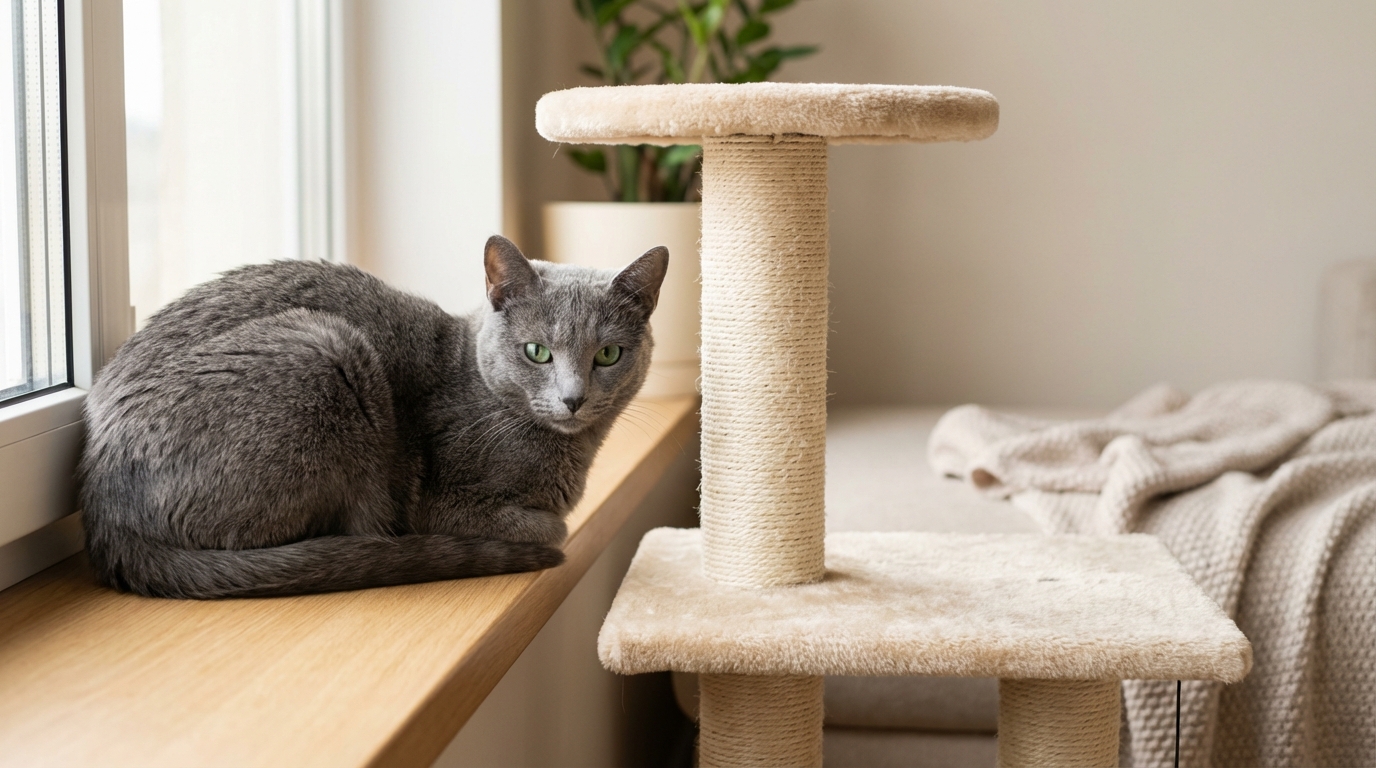
Home setup checklist: calm routines and safe spaces
A Russian Blue often does best in a home that feels orderly and predictable. You don’t need a huge space, but you do want clear “zones” for rest, play, and litter. When the basics are set up well, many behavior issues (stress hiding, litter box avoidance, nighttime restlessness) are easier to prevent.
- Quiet retreat: A bed or covered hideaway in a low-traffic room for naps and decompression.
- Vertical territory: A sturdy cat tree, shelves, or a window perch for climbing and observing.
- Scratch options: Offer both vertical and horizontal scratchers; place one near sleeping areas and another where your cat likes to stretch.
- Litter box setup: Keep boxes in calm locations, away from loud appliances; scoop daily and fully refresh on a routine.
- Feeding routine: Measured meals at consistent times can reduce food anxiety and help with weight management.
- Carrier conditioning: Leave the carrier out with a soft blanket so it becomes “furniture,” not a signal that something scary is about to happen.
If your cat is shy, start small with one safe room and expand access over days. Many Russian Blues gain confidence when they know where to go and what to expect.
Care guide: grooming, feeding, and enrichment
This Russian Blue care guide starts with the basics: steady meals, clean litter, and regular play. Their dense coat can shed, but a quick brush once or twice weekly usually keeps fur under control and may reduce hairballs.
Grooming and shedding: Focus brushing on the back, sides, and hindquarters where loose hair collects. During seasonal shedding, add an extra session and keep it short and positive. Check ears weekly for debris or odor, and trim nails every few weeks so they don’t snag on fabric or overgrow.
Feeding: Measure portions rather than free-feeding, since some individuals will happily overeat if given the chance. Choose a complete and balanced diet, provide fresh water daily, and consider a water fountain if your cat prefers running water. If you change foods, transition gradually to help avoid stomach upset.
Enrichment: This breed is smart and can get bored quietly. Rotate toys, use puzzle feeders, and provide a tall cat tree or window perch. Short, consistent play sessions (5–10 minutes) often work better than one long session. Aim for hunting-style play (stalk, chase, pounce) and end with a small meal to mimic a natural routine.
Quick tip: If your Russian Blue seems “aloof,” try scheduled interactive play at the same time each day—routine builds confidence and can increase affectionate behavior.
At-home handling: Practice gentle paw touches, brief tooth-lip lifts, and quick coat checks. These micro-sessions make it easier to spot changes early and reduce stress during vet visits.
- Grooming: Brush 1–2x weekly; increase during seasonal shedding
- Litter: Keep boxes scooped daily; many prefer a very clean setup
- Exercise: Wand toys, climbing, and food puzzles
Health and preventive care essentials
Russian Blue health is often considered relatively healthy, but individual risk varies and no breed is maintenance-free. The biggest wins usually come from prevention: good nutrition, weight management, dental care, and appropriate parasite control.
Core preventive care: Plan for routine wellness exams as advised by your veterinarian, and keep vaccines current based on lifestyle and medical history. Ask about dental evaluations, too—some cats do well with at-home brushing and dental-support diets or chews, while others may need professional cleanings if tartar and gum inflammation build up.
Weight and body condition: Because many Russian Blues are food-motivated, weight gain can sneak up if portions aren’t measured or treats are frequent. Keep an eye on body condition (you should be able to feel ribs with light pressure) and adjust calories early, before extra weight becomes a long-term issue.
Parasites and product selection: Parasite prevention is a practical cornerstone of care, especially if your cat spends time near doorways, windows, shared hallways, or other pets. Coverage can vary by product and by your cat’s lifestyle, and some households may prioritize fleas and intestinal parasites more than ticks. Your veterinarian can help you choose the right plan. If you’re building a routine, start with our cat flea, tick, and worm prevention collection and set reminders so doses aren’t missed.
- Watch-outs: Weight gain, dental buildup, stress from routine changes
- Prevention priorities: Wellness exams, vaccines as advised, dental care, parasite control, regular monitoring of appetite and energy
- At-home checks: Coat condition, stool changes, scratching, ear debris, and gum redness
When to call the vet: Appetite changes lasting more than a day, repeated vomiting or diarrhea, sudden hiding, labored breathing, straining in the litter box, or noticeable dental pain (pawing at the mouth, dropping food) deserve prompt attention.
Frequently Asked Questions
Do Russian Blues shed a lot?
They shed moderately, but their short, dense coat is usually easy to manage. Brushing once or twice a week removes loose fur and helps keep hair off furniture.
Is a Russian Blue cat good for busy households?
Many do well if their routine stays predictable and they have a quiet place to retreat. They’re often affectionate without being clingy, but they may take longer to warm up to frequent visitors or sudden changes.
What’s the most important part of Russian Blue care day to day?
Consistency: measured meals, clean litter, brief daily play, and a stable environment. Preventive care matters, too—keep up with vet-recommended checkups and choose parasite protection that matches your cat’s lifestyle.
Ready to stock up on essentials? Browse our vet-grade, budget-friendly cat parasite prevention options to support a consistent routine, and talk with your veterinarian if you’re unsure which product best fits your cat.