

Strong senior cat health starts with noticing small changes before they become big problems. A few simple at-home checkups—plus regular wellness visits—can help your cat stay comfortable, active, and confident as the years add up.
This guide covers practical, owner-friendly steps for care for older cats, including what to watch for, how often to check, and when to take action.
When is a cat “senior,” and why checks matter
Many cats are considered “senior” around 7–10 years old, and “geriatric” in the mid-teens and beyond. Age is only part of the story—some cats stay spry for years, while others develop age-related changes earlier.
The point of senior cat checkups at home isn’t to “medicalize” your cat. It’s to catch subtle shifts early, when supportive adjustments (and timely vet guidance) can make the biggest difference.
Because cats often hide discomfort, a consistent routine can be more useful than waiting for obvious signs. Pair your at-home observations with vet exams twice a year for senior cats when possible. Semiannual visits help your veterinarian spot trends, review weight and mobility, discuss diet, and recommend screening based on your cat’s history.
- Pick a schedule: a brief weekly scan plus a more thorough monthly check.
- Track trends: appetite, weight, litter box output, and energy level over time.
- Keep it calm: do checks after a meal or nap when your cat is relaxed.
Monthly at-home checks you can do in minutes
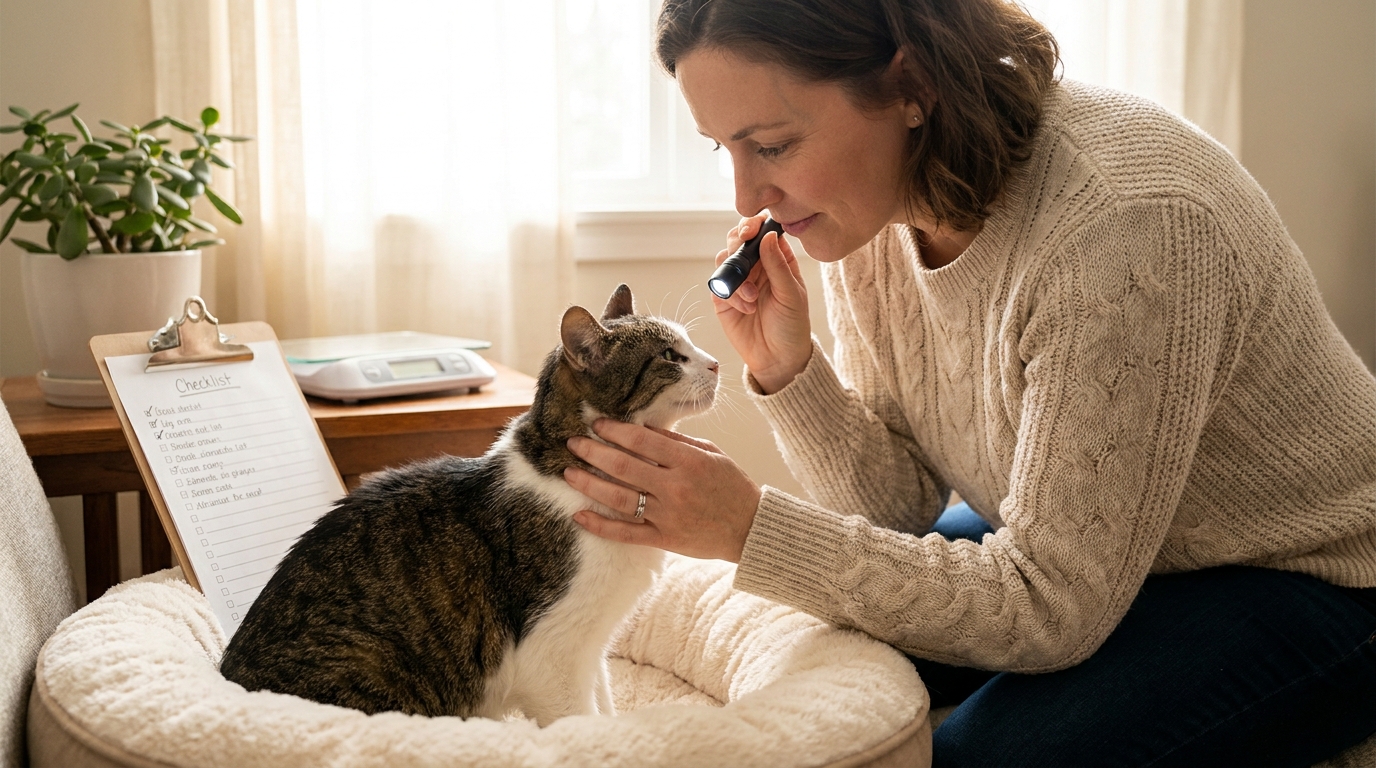
Think of this as a “nose-to-tail” routine for your older cat. You’re not trying to diagnose anything—just noticing changes from your cat’s normal.
- Eyes: look for cloudiness, discharge, redness, or squinting.
- Ears: check for odor, dark debris, head shaking, or sensitivity to touch.
- Nose: note crusting, thick discharge, or noisy breathing.
- Body feel: gently run your hands along ribs, spine, hips, and belly for new lumps, tenderness, or muscle loss.
- Paws and nails: look for overgrown nails, cracked pads, or reluctance to put weight on a foot.
If your cat dislikes handling, break the routine into 10-second mini-checks across a few days. Care for older cats works best when it’s consistent and low-pressure.
Weight, appetite, water, and litter box clues
Daily habits often change before you see obvious illness. A simple kitchen scale (or weighing yourself with and without your cat) can help you notice slow shifts.
- Weight loss: even if your cat is still eating, a gradual drop matters.
- Weight gain: can signal reduced activity or overeating and may worsen stiffness.
- Appetite changes: eating less, eating more, or becoming picky can all be meaningful.
- Water intake: increased drinking or suddenly empty bowls are worth noting.
- Litter box: changes in clumps, frequency, straining, accidents, vocalizing, or avoiding the box.
Quick tip: Take one photo of the litter box after scooping once a week (before cleaning). Comparing photos makes it easier to spot changes you might miss day-to-day.
Also watch for “secondary signs” like bad breath, drooling, messy eating, or food falling out of the mouth. Those clues can mean your cat wants to eat but is uncomfortable doing so.
Mobility, mouth, coat, and skin checks
In senior cat care, comfort is everything. Cats with stiffness may jump less, hesitate on stairs, or stop using favorite perches—often without crying out. Try watching your cat move when they think you aren’t paying attention.
- Mobility: reluctance to jump, slower rising, stiffness after naps, missed landings, or hiding more than usual.
- Grooming: dandruff, mats, greasy coat, or urine staining from reduced flexibility.
- Mouth: bad breath, pawing at the face, chewing on one side, dropping food, or avoiding hard kibble.
- Skin: scabs, redness, thinning fur, or new bumps (especially if a bump grows, bleeds, or changes shape).
Support at home can be simple: lower litter box entry, add soft bedding, use ramps or steps to favorite spots, place food and water where your cat doesn’t need to climb, and brush more often to prevent mats (which can tug on sensitive skin).
Parasites and prevention for older cats
Even indoor cats can encounter fleas and other parasites—via people, other pets, or open doors and windows. Because older cats may tolerate irritation less well, staying consistent with prevention is a practical part of senior wellness.
Check the coat monthly by parting fur at the neck and base of the tail. Look for small dark specks (often called “flea dirt”), itchiness, or overgrooming patches. If you have multiple pets, one itchy animal can quickly become a household-wide problem.
- Stick to a routine: set a calendar reminder so doses aren’t missed.
- Match product to lifestyle: indoor-only, indoor/outdoor, or multi-pet homes may need different approaches.
- Check the environment: wash bedding and vacuum favorite nap spots if you suspect fleas.
Safety note: Use cat-specific parasite products only. Never apply dog products that contain permethrin to cats—this ingredient can be toxic to them. If you’re unsure what’s safe for your cat’s age and health history, ask your veterinarian before using any new product.
If you’re shopping for affordable, vet-grade options, focus on reliable prevention products and keep them on schedule—consistency is usually more effective than reacting after you see scratching.
When to see the vet urgently
Call your vet promptly (or seek urgent care) if you notice any of the following, especially in an older cat:
- Straining to urinate, crying in the litter box, or little/no urine
- Sudden refusal to eat or drink, or repeated vomiting
- Marked lethargy, collapse, or weakness
- Rapid breathing, open-mouth breathing, or pale/blue-tinged gums
- Severe pain, sudden limping, or inability to walk/jump normally
- Uncontrolled bleeding, seizures, or sudden confusion
- Quickly growing lump or a wound that looks infected (swelling, heat, discharge, strong odor)
Frequently Asked Questions
How often should I do at-home checks for my senior cat?
Do a quick weekly scan (eyes, appetite, litter box, mobility) and a more thorough hands-on check monthly. The key is consistency so you notice gradual changes rather than relying on memory.
What’s the most common sign owners miss with older cats?
Subtle weight loss and reduced jumping are frequently overlooked because they can happen slowly. Tracking weight and watching mobility around favorite furniture can reveal early changes.
My cat still eats well—can there still be a problem?
Yes. Some issues show up first as increased thirst, litter box changes, messy eating, or grooming decline even when appetite seems normal. Use your monthly routine to look at the whole picture.
Can you summarize this into a simple checklist I can save?
Yes—here’s a printable-style checklist you can copy into your notes app.
- Weekly (2 minutes):
- Appetite and eating behavior (including messy eating)
- Water bowl level (any big change?)
- Litter box: clump size/number, straining, accidents
- Mobility: jumping, stairs, stiffness after naps
- Monthly (5–10 minutes):
- Weight check and quick body condition feel (ribs/spine/hips)
- Eyes/ears/nose check for discharge, odor, redness
- Mouth check for breath changes, drool, chewing discomfort
- Coat and skin scan for mats, dandruff, scabs, new bumps
- Paws and nails (overgrowth, cracked pads)
- Parasite check (flea dirt/itching) and prevention reminder
- Vet routine: schedule wellness exams every 6 months for senior cats, or as your vet recommends
Want to keep your routine simple? Stock up on parasite prevention so you’re never late on a dose, and keep a monthly checklist on your phone for senior cat checkups at home. If you notice fast changes (like sudden weight loss, straining in the litter box, or marked lethargy), contact your veterinarian.