

When an older dog seems “different” overnight—wandering, waking up confused, or forgetting routines—it can be alarming. One common age-related cause is canine cognitive dysfunction (CCD), sometimes called dog dementia. CCD in senior dogs typically develops gradually, affecting sleep, house training, and a dog’s sense of security at home. The good news is that practical support—steady routines, a safer setup, and a vet check to rule out look-alike conditions—can make day-to-day life more comfortable for everyone.
Signs your older dog may be declining cognitively
Age-related brain changes can look like “forgetfulness,” but CCD often shows recognizable patterns that become more frequent over time. Many pet parents notice mild changes first—then realize the changes are happening in more situations (especially at night).
- Disorientation: Getting “stuck” in corners, behind furniture, or staring at walls; seeming lost in familiar rooms.
- Sleep-wake changes: Restless nights, pacing, vocalizing, or waking up confused.
- House-training slipups: Accidents despite normal access outside; asking to go out more often but seeming unsure once outside.
- Social shifts: Less interest in greeting people, increased clinginess, or appearing anxious when alone.
- Changed activity level: Wandering aimlessly, reduced play, or repetitive behaviors (circling, licking, or “busy” pacing).
Not every older dog who paces at night has CCD. But when you see multiple signs together—and especially when they’re progressive—it’s worth taking action early and getting guidance before assuming it’s dementia.
Rule out look-alike health issues first
Before you label a behavior change as cognitive decline, schedule a veterinary exam. Several common medical or sensory problems can mimic CCD in senior dogs, and some are treatable or manageable in a way that improves comfort quickly.
Bring a simple two-week log to your appointment. If possible, include:
- Sleep notes: bedtime and wake time, number of nighttime wake-ups, pacing/vocalizing episodes (time and duration)
- Bathroom details: potty break times, accidents (time, location, urine vs. stool), any straining or urgency
- Food and water: appetite changes, water intake changes, new treats/foods
- Behavior triggers: what happened right before confusion, anxiety, or “stuck” moments (noise, visitors, stairs, dark rooms)
- Mobility/pain clues: trouble rising, hesitation on floors, licking joints, changes on walks
Common rule-outs for CCD-like signs include:
- Arthritis or other pain: Pain can cause nighttime restlessness, irritability, reluctance to settle, and “stuck” behavior that looks like confusion. Dogs may pace because lying down hurts, or they may hesitate at thresholds and stairs.
- Urinary tract infection, incontinence, or other urinary issues: Accidents and frequent trips outside aren’t always “forgetting.” Discomfort, urgency, or leaking during sleep can create sudden house-training problems and disrupted nights.
- Hypothyroidism and other metabolic issues: Hormonal or metabolic changes can affect energy, behavior, and skin/coat comfort, and may contribute to seeming “off” or less engaged.
- Vision or hearing loss: A dog who can’t see well in low light, or who startles because they can’t hear you approach, may appear disoriented or anxious. Sensory decline can also make new spaces feel threatening.
Also think about recent changes at home. New furniture, a new pet, different feeding times, or even a new walking route can make an older dog look disoriented when they’re actually stressed, sore, or struggling to see and hear as well as they used to.
Home setup changes that reduce stress and accidents
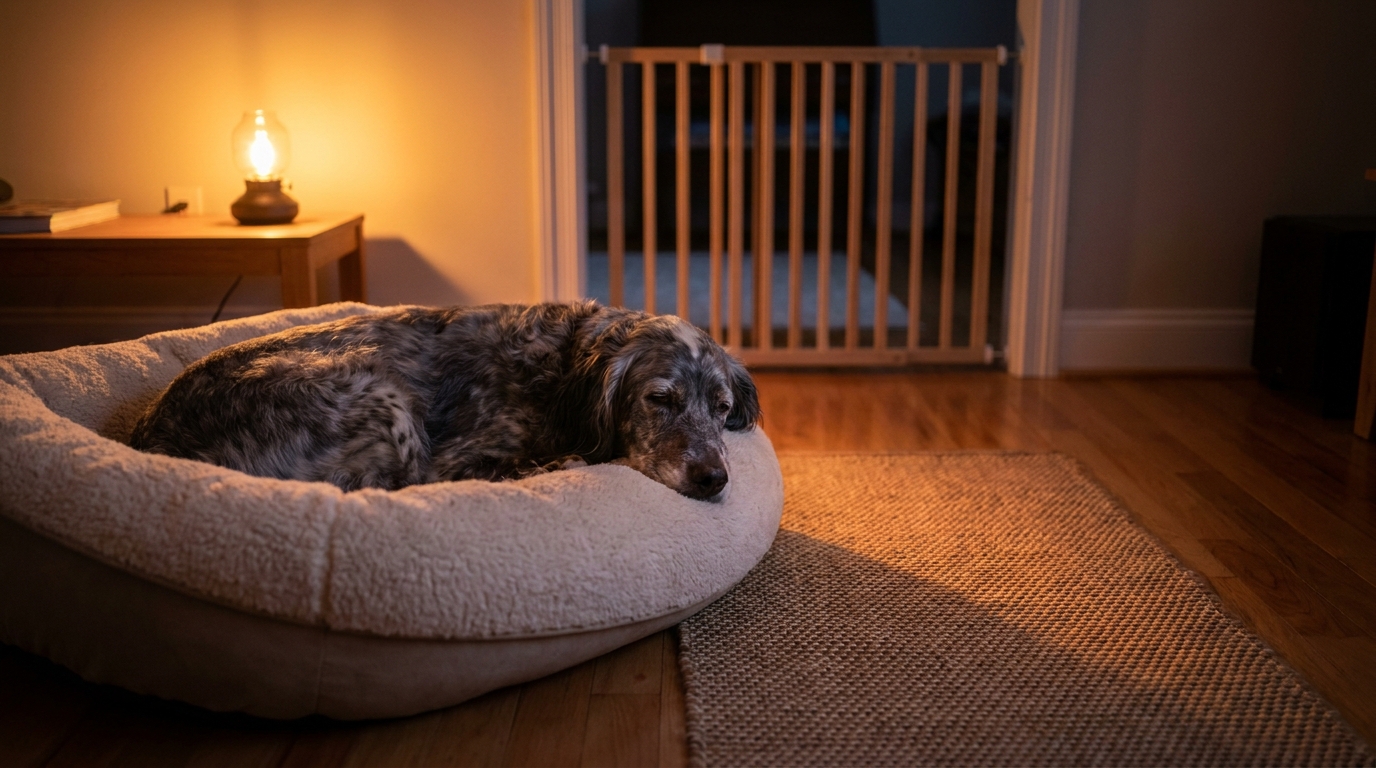
Your goal is to make the environment predictable and safe—like adding “handrails” to your dog’s day. Small adjustments can reduce falls, limit panic moments, and help your dog navigate with less effort.
- Keep pathways consistent: Avoid rearranging furniture and keep floors clear of clutter.
- Improve traction: Add rugs or runners on slick surfaces and secure them so they don’t slide.
- Use night lighting: Soft, steady lights can reduce nighttime disorientation and help dogs find water and doors.
- Create a calm zone: Set up a familiar sleep spot in a quiet area away from loud household traffic.
- Block hazards: Baby gates near stairs or tight spaces can prevent falls and reduce “stuck” moments.
Quick tip: Place water bowls in two consistent locations so your dog doesn’t have to “hunt” for them when confused. Pair this with a consistent feeding and potty schedule to support steadier routines.
If accidents happen, avoid punishment. With cognitive and sensory changes, scolding can increase anxiety and make the pattern worse. Instead, focus on easier access outside and washable bedding layers while you and your veterinarian work through the cause.
Daily routine: enrichment, sleep, and gentle training
Consistency is your biggest tool when managing CCD. A predictable day reduces decision-making stress and helps your dog feel secure—even if their memory and awareness aren’t what they used to be.
Keep meals and walks on a schedule. Try to keep the same order of events each day (for example: potty, breakfast, short walk, rest). For many seniors, potty breaks every 4–6 hours while awake is a helpful starting point. Add an extra break right before bedtime, and consider one scheduled nighttime break if your dog is waking up and circling anyway.
Use low-frustration enrichment. Aim for “success every time.” Good options include:
- Sniff walks: slow, let-your-dog-lead outings that prioritize smelling over distance
- “Find it”: toss a few kibble pieces in a small, easy-to-search area (like a towel or a snuffle mat)
- Simple puzzle feeding: a classic, easy puzzle toy on the lowest setting, or food rolled in a loosely folded towel
Keep sessions short (often 3–10 minutes is plenty). If your dog gets stuck or overwhelmed, simplify the activity and end on a win.
Refresh cues with kindness. Some dogs benefit from re-teaching basic cues (sit, come, wait) using short sessions and high-value rewards. Use one cue, help your dog succeed, reward, then move on. Repeating commands over and over can add stress.
Support better sleep. Calm evenings, a comfortable temperature, and a predictable wind-down routine can reduce nighttime pacing. Soft music or white noise may help some dogs settle, especially when confusion is worse after dark.
Safety tools for wandering, slipping, and nighttime confusion
CCD can increase wandering, getting lost in familiar areas, and nighttime roaming. Safety tools don’t treat cognitive changes, but they can prevent injuries and reduce stress for both you and your dog.
- Updated ID tags and contact info: Make sure tags are readable and current.
- Harness and secure leash: A comfortable harness can improve control during disoriented walks and reduce strain compared with relying on a collar alone.
- Confinement that feels calm, not punishing: Baby gates, an exercise pen, or a cozy room setup can prevent pacing into stairs and tight spaces. Introduce any confinement gradually with treats and comfort items.
- Anti-slip socks or paw grips: Helpful for dogs who splay on smooth floors, especially when they get up quickly at night.
- Door and barrier consistency: Keep doors closed the same way each day and use the same barrier locations so your dog isn’t surprised by “new” obstacles.
These tools are especially valuable while you’re figuring out whether the behavior is CCD, pain, urinary discomfort, sensory decline, or a combination.
Why parasite prevention still matters for senior comfort
When you’re focused on canine cognitive dysfunction, parasite prevention can feel like a separate topic—but it still affects daily comfort and sleep. Flea or mite irritation, allergic flares, and skin infections can lead to itching, repeated scratching, and broken sleep. For a dog already prone to nighttime confusion, poor sleep can make evenings feel harder for everyone.
Consistent protection can also reduce secondary stressors like ear irritation and skin hotspots that may make an older dog seem more reactive to touch or less willing to settle. If your dog is scratching, shaking their head, or suddenly avoiding handling, address those discomfort signals promptly.
Because seniors often have other health conditions and may take additional medications, it’s smart to ask your veterinarian which preventive best fits your dog’s age, weight, and medical history—and whether any product changes should be timed around other treatments.
Frequently Asked Questions
How quickly does dog dementia (CCD) progress?
Progression varies. Some dogs change slowly over months, while others have more noticeable shifts in weeks, sometimes after a stressful event or a health flare. Early support and a stable routine can make day-to-day life feel more manageable.
What helps with nighttime pacing and waking up confused?
Start with basics: predictable daytime activity, a calm evening routine, and a comfortable sleep setup with soft lighting. Many households also do better with a planned bedtime potty break and (if needed) one scheduled overnight break. If pacing is new, intense, or paired with accidents, schedule a veterinary exam—pain and urinary issues are common hidden drivers.
Is senior dog confusion ever reversible?
True cognitive decline is typically managed rather than “fixed,” but some look-alike issues can improve—like arthritis discomfort, urinary tract problems, or sensory changes. That’s why it’s important not to assume dementia without a veterinary evaluation.
What evidence-based treatments might my veterinarian discuss for CCD?
Your veterinarian may recommend a combination approach based on your dog’s symptoms and rule-out results. Options can include prescription medication (such as selegiline for some dogs), therapeutic diets formulated for senior cognition, and supplements with studied ingredients. They may also suggest structured enrichment and environmental changes as part of a long-term management plan. Avoid adding new supplements or changing medications without veterinary guidance, especially for seniors taking other prescriptions.
If you’re working on a steadier routine and want to reduce itch-driven sleep disruptions, browse parasite prevention options at Discount Pet Medication. Before changing preventives or adding supplements, check in with your veterinarian to choose a plan that fits your dog’s age, health status, and current medications.