

Few things are harder to watch than a dog trembling, panting, or hiding because of loud noises. Dog anxiety during storms is incredibly common—and so is fireworks anxiety in dogs of every size, breed, and age. The good news: there are practical, proven ways to reduce your pet's stress and help them feel safe when the sky gets loud.
Why Dogs Panic During Loud Noises
Dogs hear frequencies far beyond the human range, so thunder and fireworks aren't just loud to them—they can be physically overwhelming. The sudden, unpredictable nature of these sounds triggers a fight-or-flight response that your dog can't rationalize away.
Static electricity buildup before storms can also make dogs uncomfortable, causing tingling sensations in their fur. Combine that with changes in barometric pressure and the flash of lightning, and you have a multi-sensory assault that's genuinely distressing.
Genetics play a role too. Some breeds are predisposed to noise sensitivity, and dogs that weren't exposed to a variety of sounds during their critical socialization window (roughly 3–14 weeks of age) are more likely to develop anxiety around storms and fireworks later in life.
Recognizing the Signs of Storm and Fireworks Anxiety
The obvious signs—shaking, barking, hiding under furniture—are easy to spot. But anxiety in dogs can also show up in subtler ways that owners sometimes miss.
- Panting or drooling when it isn't hot
- Pacing or restlessness that won't settle
- Destructive behavior such as scratching doors or chewing furniture
- Escape attempts including bolting through open doors or jumping fences
- Loss of housetraining (accidents indoors)
- Lip licking, yawning, or whale eye (showing the whites of the eyes)
If your dog shows any of these behaviors when a storm rolls in or fireworks start, they're telling you they need help.
Create a Safe Space Before the Noise Starts
Preparation is half the battle. Set up a designated retreat area—an interior room, closet, or crate covered with a blanket—where sound is naturally muffled. Make it available well before the noise event so your dog already associates it with comfort.
Close windows, draw curtains, and turn on a fan, white-noise machine, or calming music playlist designed for dogs. These simple steps dampen sharp noise peaks that are the biggest anxiety triggers.
Quick tip: Update your dog's ID tag and microchip details before any predicted storm season or holiday fireworks period. Panicked dogs are escape artists, and current contact information is the fastest way to get a lost pet home.
Keep your own body language calm and neutral. It's fine to comfort your dog with gentle petting, but avoid over-fussing—matching their energy can accidentally reinforce the idea that there's something to fear.
Calming Products That Actually Help
Several over-the-counter options can make a real difference for dogs with noise anxiety. Here's what to consider adding to your toolkit:
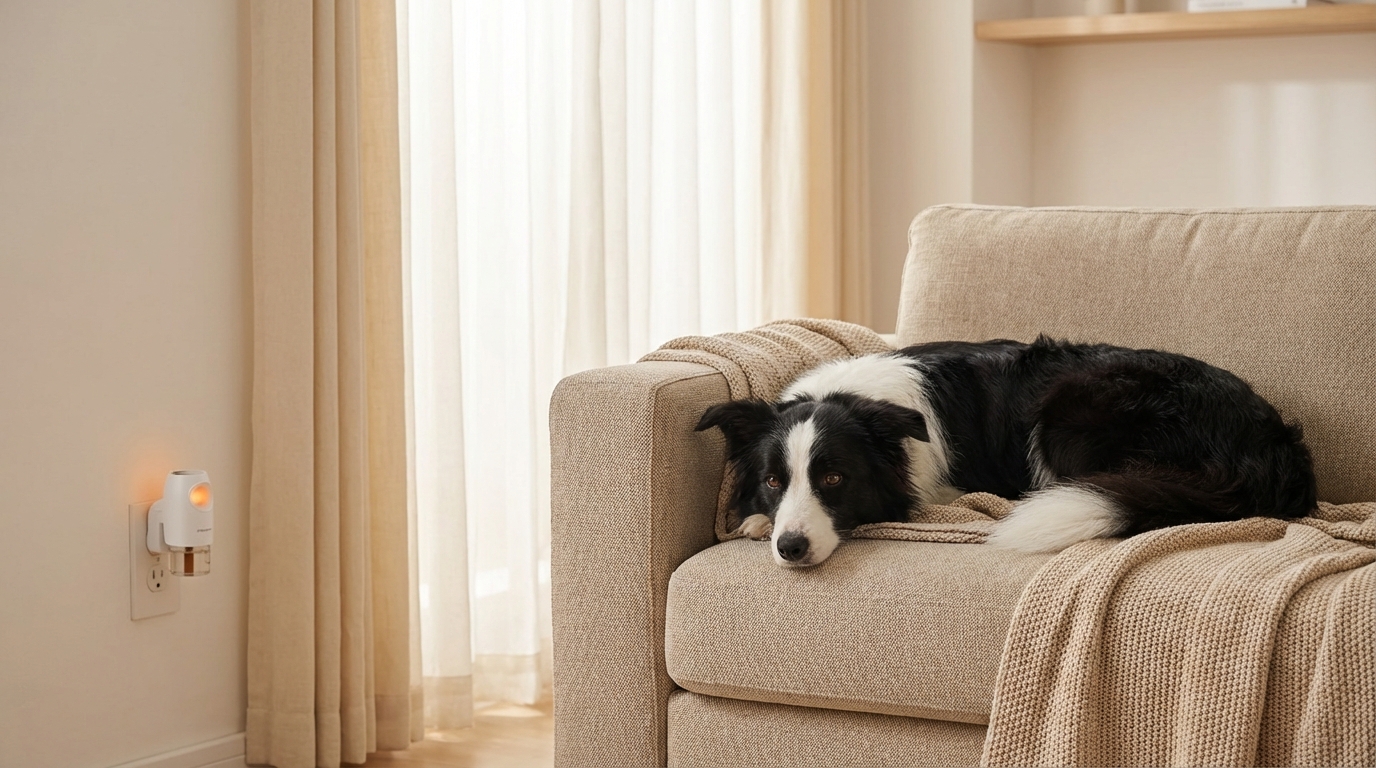
Pheromone diffusers and collars. Synthetic versions of the dog-appeasing pheromone (DAP) mimic the calming chemical nursing mothers release. Adaptil is a well-known range that comes in diffusers, sprays, and collar formats—ideal for plugging in near your dog's safe space a day or two before an expected event.
Calming supplements. Ingredients like L-theanine, casein, and tryptophan support relaxation without heavy sedation. These are most effective when given 30–60 minutes before the noise begins.
Compression wraps. Snug-fitting body wraps apply gentle, constant pressure—similar to swaddling an infant—which can lower heart rate and reduce visible stress behaviors in many dogs.
Browse our full dog product range to find calming solutions, supplements, and more at prices that won't add to your stress levels.
Long-Term Strategies for Noise-Anxious Dogs
Desensitization training. Between storm seasons, play recorded thunder or fireworks sounds at a very low volume while your dog is relaxed and receiving treats. Gradually increase the volume over weeks or months. The goal is to build a neutral—or even positive—association with the sounds.
Counter-conditioning. Pair the onset of noise with something your dog loves: a stuffed Kong, a favorite chew, or a quick game. Over time, the arrival of thunder can become the cue for "good things happen" instead of panic.
Consistent routine. Dogs feel safer when their daily schedule is predictable. On days when storms or fireworks are likely, stick as close to the normal feeding, walking, and bedtime routine as possible.
For dogs with severe anxiety that doesn't respond to environmental changes and calming aids, a quick chat with your vet can help identify additional support options tailored to your pet's needs.
Frequently Asked Questions
Can dogs outgrow anxiety related to storms and fireworks?
It's uncommon for noise anxiety to resolve on its own. In fact, it often worsens with age if left unaddressed. Early intervention with desensitization, calming products, and a safe environment gives your dog the best chance of improvement.
How early should I give a calming supplement before a storm?
Most calming supplements work best when given 30 to 60 minutes before the noise event. If a storm is forecast for the evening, dose ahead of time rather than waiting for the first clap of thunder when your dog is already stressed.
Are pheromone products safe to use alongside calming supplements?
Yes. Pheromone diffusers and collars work through scent receptors, while most supplements act through different biological pathways—so they can complement each other well. Always follow the product's label directions for use.
Don't wait for the next big boom to take action. Stock up on calming aids and anxiety solutions now so you and your dog are ready when the noise hits.