

This new puppy checklist covers the day-one basics so you can focus on bonding, not last-minute shopping. If you’re wondering what to buy for a puppy, start with safety, feeding, comfort, training, and parasite protection. Use the sections below as a practical puppy essentials list you can check off in minutes.
Home setup & safety (before your puppy arrives)
The fastest way to reduce accidents is to “puppy-proof” like you would for a toddler. Start by deciding which rooms are puppy zones and blocking off the rest with a sturdy baby gate or exercise pen. This makes your new puppy checklist easier because you’ll know exactly where to place essentials.
- Gates or playpen: Create a safe area for naps and supervised play.
- Cord and hazard control: Bundle cords, remove small chewable items, and secure trash cans.
- Chew-safe environment: Pick up shoes, kids’ toys, and anything that can splinter.
- Safe cleaning products: Choose pet-safe floor and potty accident cleaners.
If you’re still mapping out what to buy for a puppy, prioritize safety gear first—because it protects everything else you purchase. Once your setup is secure, you can add comfort items without worrying they’ll be destroyed on day one.
Feeding essentials (bowls, food, and treats)
Feeding is where routines start, so keep it simple and consistent. Choose a quality puppy food that fits your pup’s age and size, and avoid frequent food switching in the first week unless you need to transition gradually.
- Food bowl + water bowl: Non-slip, easy to wash, and sized for a small mouth.
- Puppy food: Look for a formula designed for growth and development.
- Training treats: Small, soft pieces you can give often during training.
- Food storage container: Helps keep food fresh and reduces mess.
A practical puppy essentials list also includes a simple feeding plan: same spot, same schedule, and fresh water available. If your puppy eats too fast, consider a slow-feeder bowl to reduce gulping and tummy upset.
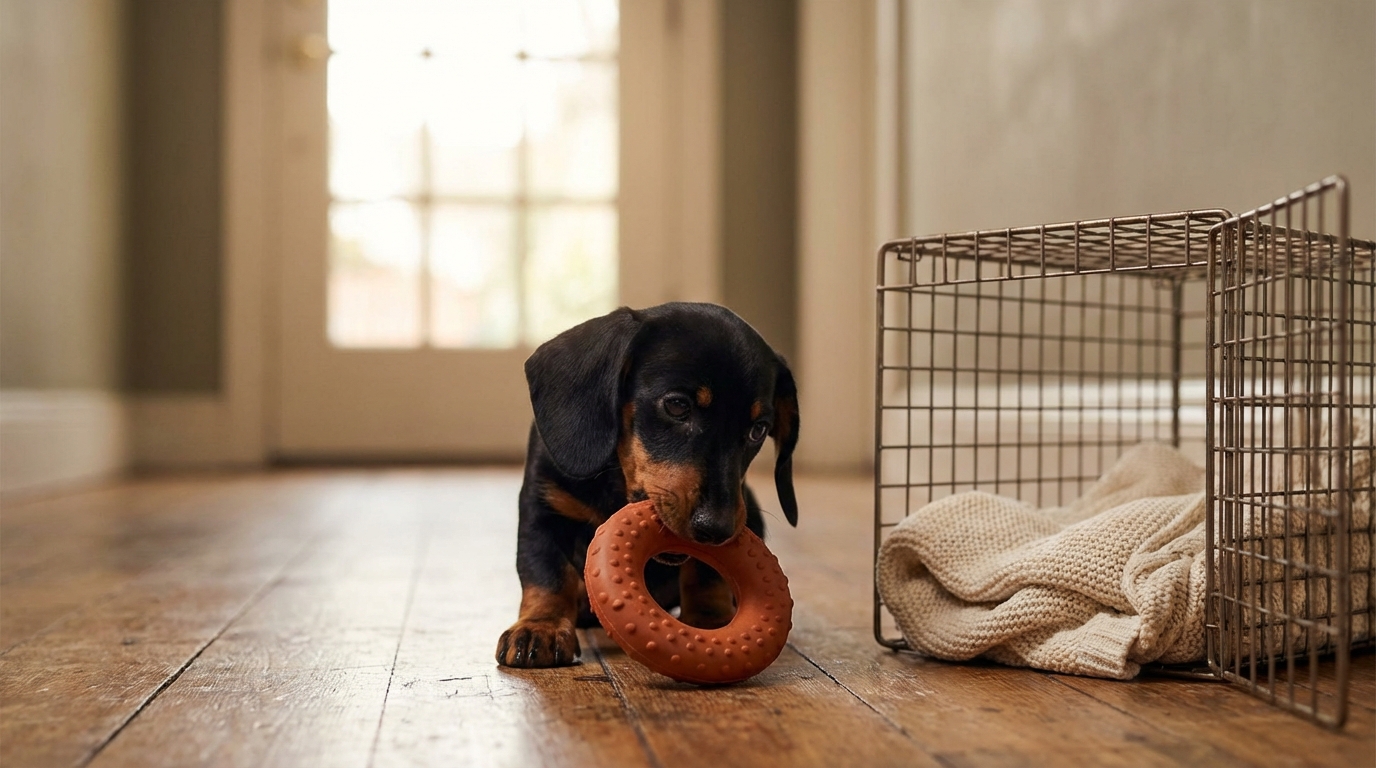
Comfort & sleep (crate, bed, and calming tools)
Sleep is a day-one priority because puppies need lots of rest to learn and grow. A predictable sleep setup also supports potty training and prevents nighttime wandering. In most homes, a crate or puppy pen becomes the “safe place” where your pup can relax.
- Crate (or playpen): Choose a size that allows your puppy to stand and turn around comfortably.
- Bed or crate mat: Start with something washable and durable.
- Blanket: Helps with warmth and comfort; choose easy-clean fabric.
- Chew toys: Offer multiple textures to redirect teething.
Quick tip: Put one chew toy and one comfort item in the crate, then rotate toys daily—novelty keeps your puppy interested and reduces furniture chewing.
When you’re deciding what to buy for a puppy, don’t overdo it with plush toys on day one. Start with a few safe chews and one soft item, then expand based on your puppy’s play style and chewing strength.
Training & cleanup (leash, ID, and potty supplies)
Training supplies aren’t just for later—they’re day-one tools that prevent bad habits. Your puppy essentials list should cover safe outings, identity, and cleanup so you can calmly handle surprises.
- Collar or harness: Lightweight, adjustable, and comfortable for a growing pup.
- Leash: A standard leash is best for learning; skip retractables at first.
- ID tag: Include at least a name and contact number.
- Poop bags: Keep rolls by the door and in your treat pouch.
- Enzymatic cleaner: Helps remove accident odors and reduces repeat marking.
- Pee pads (optional): Useful for protecting floors during early training or confinement.
For a streamlined new puppy checklist, set up a “grab-and-go” station near the door with leash, bags, and treats. The easier it is to leave quickly, the fewer potty accidents you’ll have indoors.
Health & parasite prevention (day-one must-haves)
Day one is the right time to plan for ongoing health—especially prevention. Puppies are curious, close to the ground, and often in contact with new surfaces, which can increase exposure to pests. Building parasite protection into your puppy essentials list helps keep routines consistent.
- Flea and tick protection: Pick an age-appropriate product and stay on schedule.
- Heartworm prevention: A key part of a year-round wellness routine.
- Dewormer: Many puppies need routine deworming early on.
- Basic grooming tools: Puppy-safe brush/comb, nail trimmer or grinder, and gentle shampoo.
- First-aid basics: Styptic powder, bandage materials, and saline for gentle rinsing.
If you want to knock out the most important shopping in one place, browse our puppy supplies for everyday essentials. You can also use the same puppy supply checklist approach to restock monthly so you never run out mid-training week.
Frequently Asked Questions
What are the true day-one must-haves for a new puppy?
Focus on safety (gate/pen), feeding basics (food, bowls), a sleep setup (crate or bed), and training basics (leash, ID, cleaner). Add parasite prevention early so it becomes a normal routine rather than a rushed purchase later.
How much should I buy at once versus later?
Buy the essentials that support daily routines, then wait on extras like multiple beds, lots of toys, or specialty outfits. Your puppy’s chewing style, size, and preferences become clearer after the first week or two.
What if I don’t know which parasite prevention product to choose?
Start by confirming your puppy’s age and current weight, then select a product labeled for puppies and follow the package directions. If you’re unsure, compare formats (chew, topical) based on what your puppy tolerates best and your ability to stay consistent.
Ready to shop your new puppy checklist in one trip? Stock up on day-one essentials and preventive care with our puppy supplies, and chat to your vet at your first visit to confirm the right wellness timeline for your pup.