

Following a puppy vaccination schedule is one of the simplest ways to protect your new dog during their most vulnerable months. If you’re trying to plan your puppy’s first vet visits, this guide explains what typically happens at each stage—so you can book ahead and shop what you need.
Medical review: Reviewed by a veterinarian on 2026-04-09. This article shares general education, not a substitute for individualized veterinary advice. Vaccination protocols vary by clinic and local risk factors. For broad vaccination principles used globally (core vs. non-core, booster timing), see guidance from the World Small Animal Veterinary Association (WSAVA).
Typical puppy vaccination schedule: a simple example
Most puppies receive a short series of vaccines spaced a few weeks apart during early life, followed by a booster later on. Your veterinarian will tailor timing based on your puppy’s age, health, and lifestyle (for example, daycare, boarding, grooming, classes, or frequent dog-to-dog contact).
Example timeline (for planning only):
- 6–8 weeks: First puppy vaccine visit (often starts the core series) + health exam.
- 10–12 weeks: Next dose(s) in the series.
- 14–16 weeks: Final dose in the initial series for many puppies.
- 12 months: Booster visit to support ongoing immunity.
Important: This is a common framework, not a rule. Some puppies start later, need an adjusted interval, or require additional protection depending on risk. Timing is also influenced by maternal antibodies—immune protection passed from mom that can fade at different rates and may affect how early vaccines “take.” Your vet’s schedule is designed to cover that window safely and effectively.
What to expect at each vaccine visit
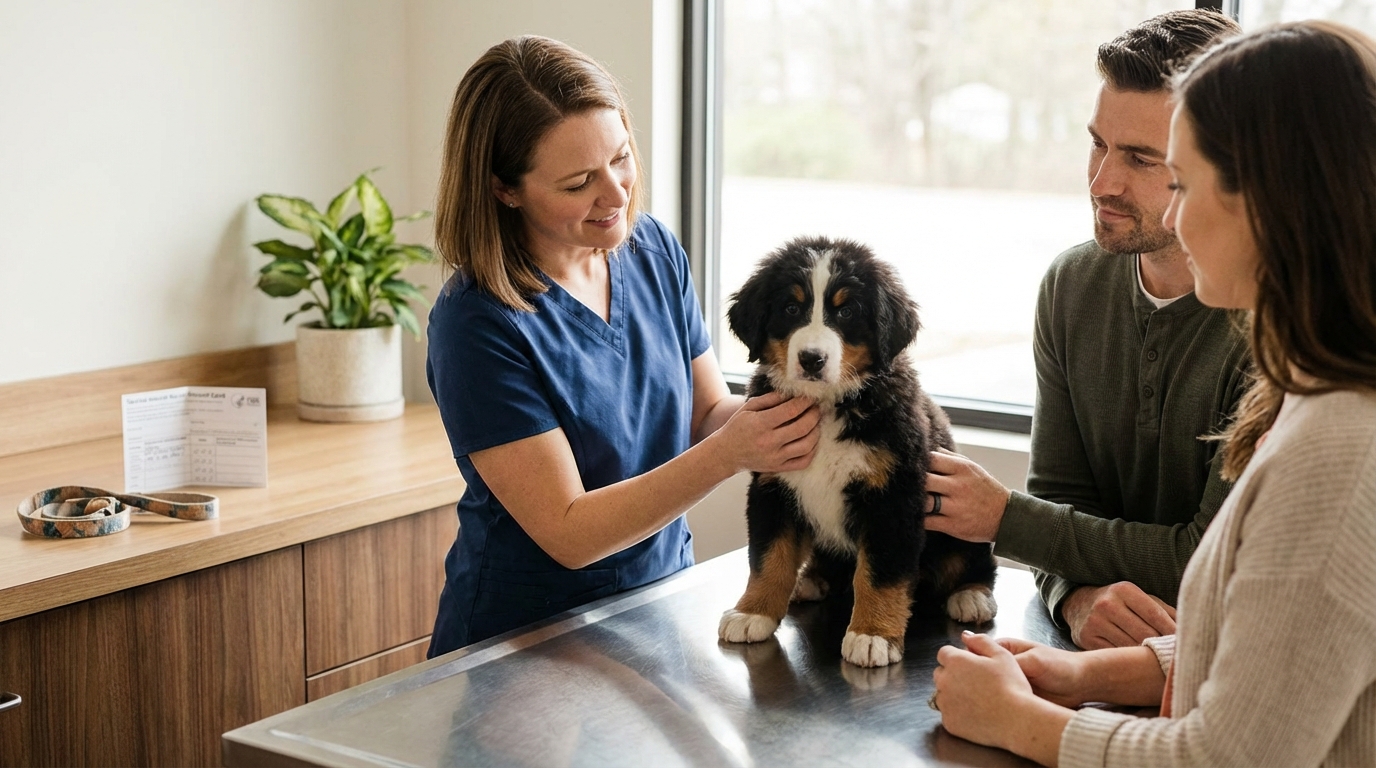
Each appointment is more than “just a shot.” Vaccine visits help your clinic track growth, spot early health issues, and support first-time owners with practical guidance—especially around nutrition, training, socialization, and parasite prevention.
Common steps during a vaccine appointment:
- Health exam: weight, temperature, heart/lung check, skin/ears, and an overall assessment to be sure your puppy is well enough for vaccination.
- Discussion: your puppy’s routine, recent diarrhea or vomiting, coughing/sneezing, itching, appetite changes, and exposure to unfamiliar dogs or environments.
- Vaccination: given under the skin by a trained professional; your puppy may yelp briefly or not react at all.
- Aftercare plan: what mild side effects are normal, what is not, and when to schedule the next visit.
Bring your puppy a little hungry and reward calm behavior with small treats after the exam. A well-fitted harness and a comfortable carrier (for tiny pups) can help them feel secure. You can stock up on essentials and calming “visit day” supplies in our puppy supplies section.
If your puppy is late or missed a shot
It happens: rescue puppies may arrive with unclear records, and busy schedules can push an appointment back. The key is not to “double up” on your own or guess. Vaccine timing matters because the series is designed to build protection step-by-step.
If your puppy is behind schedule:
- Call your clinic and share what you know (any paperwork, previous vet details, approximate dates).
- Expect a simple catch-up plan—often it’s rescheduling and continuing the series at appropriate intervals.
- Until your puppy is considered up to date, be cautious with higher-contact settings like dog parks, shared water bowls, and busy group environments.
If you’re comparing schedules online, treat them as planning tools—not a substitute for a personalized plan based on age, health status, and lifestyle.
Quick tip: Keep a photo of your puppy’s vaccine record on your phone. It makes it easier to book grooming, training, or boarding and helps prevent last-minute paperwork stress.
Before-and-after care: making shot day easier
Most puppies do well after vaccination. It’s common to see temporary tiredness, mild soreness, or a slightly reduced appetite for a day or so. Many pups benefit from a low-key day afterward: short potty breaks, gentle play, and plenty of rest.
How to prep before the appointment:
- Exercise lightly: a short walk or play session can help reduce nervous energy.
- Pack basics: treats, poop bags, a towel for the car seat, and water for the ride home.
- Skip big changes: avoid switching foods or introducing new treats right before the visit.
After the appointment:
- Watch for mild sleepiness and minor tenderness at the injection site.
- Keep play calm for the rest of the day, especially roughhousing with other dogs.
- If your puppy seems unusually unwell or you’re worried, contact your clinic for guidance.
Vaccine safety note: Serious reactions are uncommon, but they can happen and require urgent veterinary attention. Seek care right away if you notice signs such as facial swelling, hives, repeated vomiting, weakness, trouble breathing, or collapse—especially within the first several hours after a vaccine.
Comfort items can make a big difference: a chew, a soft blanket, and a properly sized collar or harness. If you’re still building your kit, browse our puppy supplies to get set up in one place.
Beyond vaccines: parasite protection that complements shots
Vaccines help protect against certain infectious diseases, but they don’t cover parasites. A complete prevention plan often includes protection against common pests that can cause itching, skin irritation, anemia, and digestive upset. Your veterinarian can recommend a plan based on your puppy’s age, size, and risk.
What many new owners include alongside vaccinations:
- Flea and tick prevention: helps reduce bites, scratching, and the chance of bringing pests into your home.
- Heartworm prevention: supports long-term health as part of routine wellness care.
- Broad deworming support: puppies can be exposed early, so consistent prevention is important.
Because puppies grow fast, weight-based products may need updating as they size up. Set a reminder to recheck the label and confirm you’re buying the right pack for your puppy’s current weight. Pairing a sensible vaccine timeline with reliable parasite prevention is one of the most cost-effective ways to support healthy development.
Frequently Asked Questions
How many rounds of puppy vaccines will my dog need?
Many puppies receive a series of vaccines across a few visits in early life, followed by a booster around the one-year mark. The total number depends on when your puppy starts, their health status, and your clinic’s protocol.
Why are puppy vaccines given in a series instead of one visit?
Early immunity can be influenced by maternal antibodies, which fade at different rates. A series helps cover that “in-between” period and improves the chances your puppy develops strong protection.
Can my puppy meet other dogs before finishing the vaccine series?
Many owners choose low-risk socialization while their puppy is still completing vaccines, such as meeting healthy, vaccinated dogs in a clean home. Avoid unknown dogs and high-traffic areas until your veterinarian confirms what’s appropriate for your puppy’s risk level.
What should I bring to my puppy’s vaccination appointment?
Bring any medical paperwork you have, plus treats, a leash or carrier, and something to clean up accidents. A calm, reward-focused approach helps your puppy feel safer at future vet visits.
Ready to prep for vaccine day and beyond? Stock up on essentials in our puppy supplies, then talk with your veterinarian about the best timing for your puppy’s next visit.