

Premium air-dried dog food is often marketed as “raw-like” convenience—but the real question most shoppers are asking is whether the daily cost makes sense for their dog. In this Ziwi Peak review-style comparison, we’ll look at air-dried vs raw through a practical lens: cost-per-day, nutrition, safety, and day-to-day ease.
What “air-dried” really means (and why it costs more)
Air-dried dog food is made by slowly removing moisture from ingredients at lower temperatures than traditional kibble. The result is a shelf-stable, meat-forward food that’s typically more concentrated than many diets because it contains far less water. That concentration is why portions often look small even when calories are adequate.
Why the higher price? You’re often paying for higher inclusion of animal-based ingredients, longer processing time, and tighter quality control. Air-dried foods also tend to be packaged and positioned like a premium category, and the cost reflects that.
One helpful way to judge value is to think beyond the bag price. Ask: how steady are stools and appetite, how easy is it for everyone in the household to feed correctly, and can you keep your dog in a healthy body condition without constant tweaks?
Quick keyword clarification (without overcomplicating it): Ziwi Peak air-dried is an example of this category, sitting between frozen/commercial raw and traditional kibble on the convenience spectrum. You’ll also see similar “just add water” products in the freeze-dried space, which can act like a middle ground for some dogs and budgets.
Cost per day: air-dried vs commercial raw vs DIY raw
Because portion sizes and calorie density vary widely, cost comparisons are easiest when you think in ranges. Below are common daily-cost patterns owners report when feeding as a full diet (not as a topper). Your actual total depends on your dog’s size, activity level, and the calorie density of the specific formula.
| Feeding approach | Typical cost per day (small dogs) | Typical cost per day (medium dogs) | Typical cost per day (large dogs) | What you’re paying for |
|---|---|---|---|---|
| Air-dried dog food | $2–$5 | $4–$10 | $8–$18+ | Convenience, shelf stability, high calorie density, consistent measuring |
| Commercial raw (frozen or fresh) | $2–$6 | $5–$12 | $10–$22+ | Raw format convenience, freezer/fridge storage, less prep than DIY |
| DIY raw | $1–$4 | $3–$8 | $6–$16+ | Ingredient control and flexibility (but more time, planning, and balancing) |
How to use the table: If you have a large dog, the “worth it” decision is often made by cost-per-day. If you have a small dog, air-dried may feel expensive per bag but manageable per meal. If you’re trying to stretch your budget, many owners get the biggest bang by using air-dried as a measured topper or training reward instead of the entire diet.
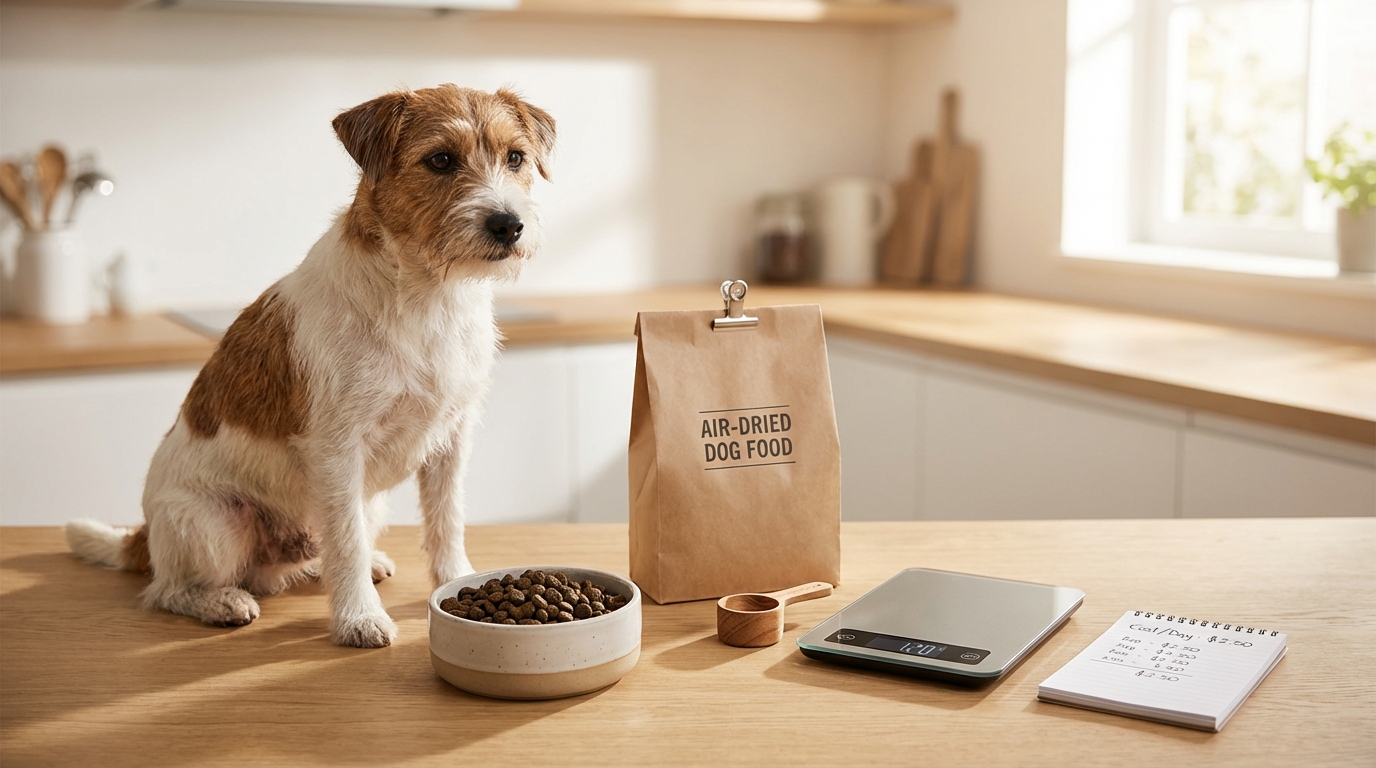
Air-dried vs raw: nutrition, safety, and convenience
When comparing air-dried vs raw, think in three buckets: nutrition, safety, and lifestyle. Raw can be very palatable and customizable, but it also demands careful sourcing, strict hygiene, storage space, and a plan for travel or busy weeks.
- Nutrition: “Raw” does not automatically mean “balanced.” The most important nutrition question is whether the diet is complete and balanced for your dog’s life stage, rather than whether it is raw, air-dried, freeze-dried, or kibble. AAFCO explains that “complete and balanced” dog foods are formulated (or tested) to meet established nutrient profiles for a given life stage; that matters because meat-forward foods can still be missing key nutrients if they’re intended as toppers only.
- Toppers vs full diets: Some air-dried and freeze-dried products are designed for supplemental feeding (toppers), which can be great for picky eaters—but they’re not meant to replace a full diet. If a product is labeled for supplemental or intermittent feeding, treat it like a boost, not the foundation.
- Safety: The main food-safety concern with raw is not “parasites” by default—it’s the higher chance of contamination with harmful bacteria such as Salmonella or Listeria, plus cross-contamination to people, surfaces, and other pets. Parasites can be a concern with any undercooked animal product depending on sourcing and handling, but bacterial risk and parasite risk aren’t the same thing.
- Convenience: Air-dried is easy to store, portion, and bring on the go. It also tends to be less messy than raw and simpler for multi-person households to feed consistently.
If your household includes anyone who is immunocompromised, very young, or older, it’s smart to be extra conservative with raw handling. Organizations like the FDA and AVMA have published general food-safety cautions about handling raw pet food, focusing on hygiene and cross-contamination risk rather than making it an “always unsafe” choice.
One practical angle many people overlook: dogs still need reliable prevention routines no matter what they eat. Browse our parasite prevention options to keep your plan simple and consistent alongside any diet.
Quick tip: If you feed raw (or even handle raw treats), treat it like raw meat in your kitchen: wash hands, bowls, and prep tools right away; avoid letting pets lick plates or counters; and store food correctly. Diet choices shouldn’t derail your everyday prevention routine.
Who should pay extra for air-dried (and who shouldn’t)
Air-dried can be worth the price if you want a raw-adjacent feeding experience with fewer logistics. It’s also a strong choice if you travel, board your dog occasionally, or rely on multiple family members to feed—because consistency is easier when the food doesn’t require thawing or multi-step prep.
Consider paying extra if:
- You want a meat-forward, highly palatable option that’s still easy to measure.
- Your dog does better with smaller portions due to calorie density (helpful for dogs that lose interest mid-meal).
- You want to limit raw-meat handling in the home while still avoiding a traditional kibble-only approach.
It may not be the best use of money if:
- Your dog already does great on their current diet (good stools, steady weight, healthy appetite).
- You’re feeding a large dog where cost-per-day becomes the deciding factor.
- You prefer DIY raw and are committed to doing it carefully and consistently, including balancing nutrients.
Simple formula checklist (vet-forward):
- Life stage: Choose a formula labeled for your dog’s life stage (especially important for growth and reproduction).
- Allergies/sensitivities: If your dog reacts to certain proteins, pick a limited-ingredient approach and change only one variable at a time.
- History of pancreatitis or fat intolerance: Rich, calorie-dense foods may not be a fit—ask your veterinarian before switching.
- Weight goals: Concentrated foods make it easy to overfeed; measure carefully and adjust based on body condition.
If you’re trying to balance budget and quality, consider using air-dried as a topper or high-value reward rather than the entire diet. You can also direct savings into essentials like flea and tick protection and other routine care that supports overall wellness.
How to switch without stomach upset
Whether you’re moving from raw to air-dried or the other way around, transitions are where many problems happen. Air-dried foods are often calorie-dense and rich, so overfeeding in the first week is a common cause of loose stools.
- Start small: Mix in a small portion for 2–3 days, then gradually increase over 7–10 days.
- Measure carefully: With air-dried dog food, a “little extra” can mean a lot of calories.
- Watch stool and appetite: Soft stool can mean the switch is too fast, portions are too large, or the formula is richer than your dog can handle right now.
- Keep everything else steady: Avoid adding new treats, chews, or table scraps during the transition.
Also remember the non-food basics: keep fresh water available, store the bag sealed to maintain freshness, and wash bowls regularly. If you’re feeding part raw, maintain strict separation between raw prep and other kitchen tools.
Frequently Asked Questions
Is air-dried food basically the same as raw?
It’s closer to raw than traditional kibble in terms of ingredient density and palatability, but it’s not identical. Air-dried is shelf-stable and processed to remove moisture; raw is typically frozen or fresh and requires more careful handling.
Why does my dog need less air-dried food per meal?
Air-dried foods usually contain less moisture and more concentrated calories than many other formats. That means portions can look smaller even when your dog is getting similar energy intake. Always follow the feeding guide as a starting point and adjust based on body condition.
Does raw feeding automatically mean more parasites?
Not automatically. Parasite exposure depends more on sourcing, handling, and what your dog is exposed to day to day. The bigger, more consistent concern with raw is bacterial contamination and cross-contamination risk. Regardless of diet, keep prevention routines consistent and talk to your veterinarian about what’s appropriate for your dog.
Is air-dried worth it for parasite-conscious households?
Diet choice is only one piece of the puzzle—consistent prevention matters most. If you feed raw or handle raw proteins often, keep hygiene tight and stay on schedule with preventive care from a trusted source.
If you’re building a practical routine around diet and daily care, stock up on essentials in our parasite prevention section—and if you’re unsure which feeding approach fits your dog’s needs, check in with your veterinarian.
References: Association of American Feed Control Officials (AAFCO) guidance on “complete and balanced” pet food nutrient profiles and feeding trials; FDA and AVMA general cautions and hygiene guidance related to handling raw pet foods (cross-contamination and bacterial risk).