

When temperatures drop, your cat needs a little extra attention to stay warm, comfortable, and healthy. Keeping your cat cozy in winter goes beyond soft blankets — it also means staying on top of nutrition, hydration, and parasite prevention. Here are practical tips to help your feline companion thrive during the coldest months of the year.
Create Warm, Draft-Free Sleeping Spots
Cats are experts at seeking out warmth, but they still need your help during winter. Place beds and blankets away from windows, exterior doors, and tiled floors where cold drafts tend to gather.
Elevated beds or padded cat igloos are excellent choices because they lift your cat off chilly surfaces. If your cat likes to curl up near a heater, make sure there's enough distance to prevent overheating or burns.
Multiple cozy spots around the house give your cat options. Cats often rotate sleeping locations throughout the day, so spreading warmth around keeps them comfortable no matter where they settle.
Adjust Nutrition and Hydration for Winter
Cats may eat slightly more in cooler months as their bodies work harder to maintain warmth. Monitor your cat's weight and adjust portion sizes if you notice changes — a little extra food is fine, but winter weight gain can creep up quickly.
Hydration is just as important in cold weather as it is in warm months. Dry indoor air can dehydrate cats faster than you'd expect. A pet water fountain or simply refreshing water bowls more frequently encourages drinking.
Consider adding some wet food to your cat's diet if you haven't already. The extra moisture content supports hydration and many cats find it more appealing during winter.
Keep Indoor Cats Active and Stimulated
Cold weather often means less time outdoors, even for cats with outdoor access. Without enough stimulation, cats can become bored, anxious, or prone to destructive behavior.
Interactive toys, puzzle feeders, and short daily play sessions help burn off energy and keep your cat mentally sharp. A simple feather wand or a crinkle ball can provide surprisingly effective exercise.
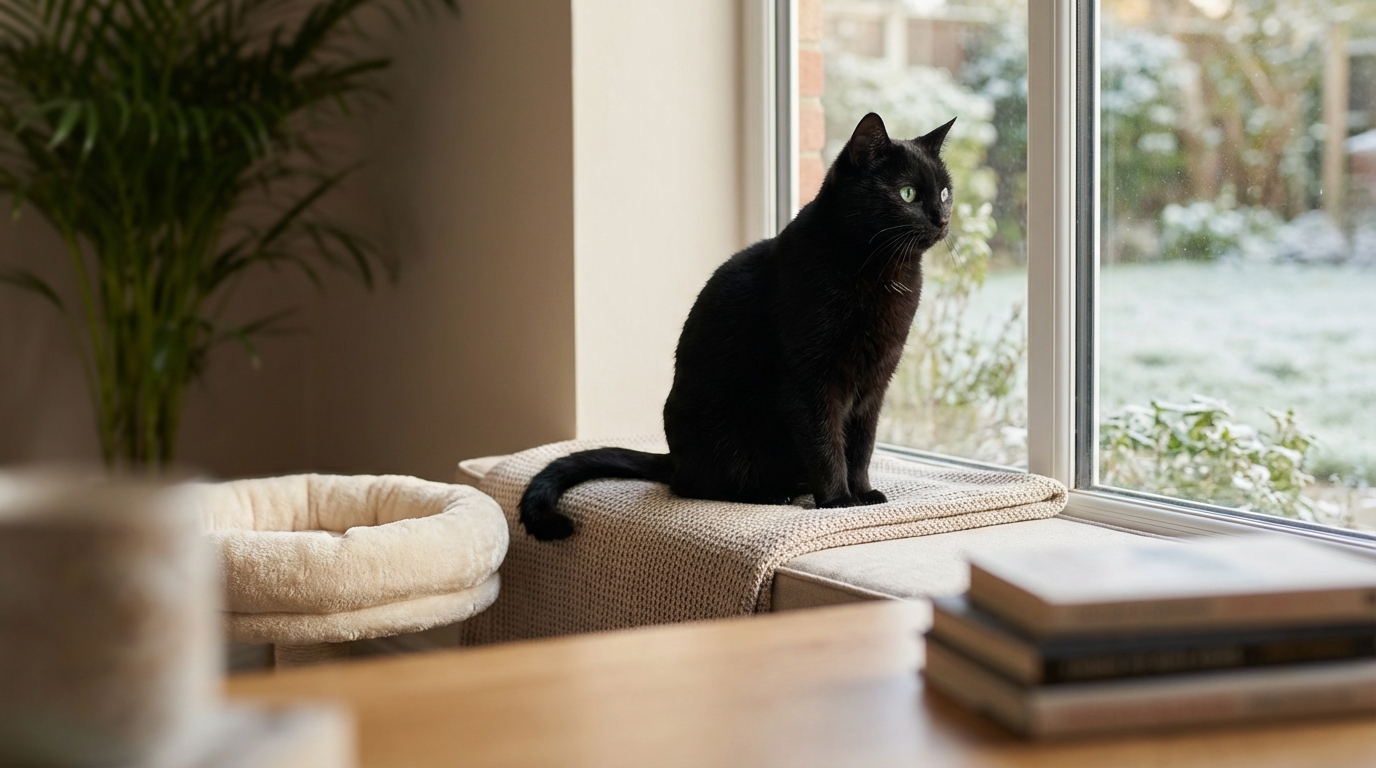
Vertical space matters, too. Cat trees, wall-mounted shelves, and window perches give your cat vantage points and climbing opportunities. Placing a perch near a window lets them watch the world outside — a favorite pastime for most indoor cats.
Quick tip: Rotate toys every week or two to keep them feeling "new." Cats lose interest in the same toys quickly, but reintroducing a forgotten feather toy after a break can spark fresh excitement.
Why Parasite Prevention Still Matters in Winter
Many pet owners assume fleas and parasites disappear during winter, but that's a common and costly misconception. Fleas can survive indoors year-round, thriving in heated homes, carpets, and bedding — exactly the warm spots your cat loves.
Intestinal worms don't take a seasonal break either. Cats that hunt rodents, insects, or simply groom themselves outdoors remain at risk regardless of the temperature outside.
Keeping your cat on a consistent flea and tick prevention schedule through winter is the most effective way to avoid infestations. Breaking the cycle for a few months gives parasites a chance to establish themselves, making treatment harder and more expensive later.
Year-round cat worming treatments are equally important. A regular schedule protects not just your cat but also the humans in your household from zoonotic parasites.
Protect Your Cat's Skin and Coat in Dry Weather
Indoor heating strips moisture from the air, which can leave your cat's skin dry, flaky, and itchy. You might notice more dandruff or increased scratching during colder months.
Regular brushing stimulates natural oil production and distributes it through the coat. For long-haired breeds, brushing also prevents mats that can trap moisture against the skin and cause irritation.
Omega-3 and omega-6 fatty acid supplements or foods enriched with these nutrients can improve coat quality from the inside out. If dryness persists despite these steps, a small humidifier in the rooms your cat frequents can make a noticeable difference.
Be cautious with bathing during winter. Most cats rarely need baths, and over-bathing strips natural oils, worsening dry skin. If a bath is necessary, use a gentle cat-specific shampoo and ensure your cat is completely dry before they return to cooler areas of the house.
Frequently Asked Questions
Do indoor cats still need flea prevention in winter?
Yes. Fleas thrive in warm indoor environments year-round, and heated homes provide ideal conditions for flea eggs and larvae to develop. Keeping your cat on a consistent preventative treatment avoids surprise infestations during the colder months.
How can I tell if my cat is too cold?
Signs include curling tightly into a ball, seeking out heat sources like radiators or laptops, cold ears and paws, and general lethargy. If your cat is shivering or reluctant to move, the environment is likely too cold and you should add warm bedding or raise the room temperature.
Should I change my cat's food during winter?
Some cats benefit from slightly increased portions or higher-calorie food in winter, especially if they spend time outdoors. Monitor your cat's body condition regularly and adjust portions gradually to avoid excessive weight gain.
Keeping your cat comfortable, healthy, and protected during winter doesn't have to be complicated or expensive. Stock up on affordable cat parasite prevention at Discount Pet Medication so your feline friend stays covered all season long — and chat to your vet if you have any specific health concerns about your cat this winter.