

Learning how to brush your dog's teeth is one of the simplest ways to prevent painful dental disease and costly treatments down the road. Good dog dental hygiene starts at home, and with the right technique, most dogs learn to tolerate — even enjoy — a daily brushing routine. This guide walks you through every step so you can keep your pup's mouth healthy between professional cleanings.
Why Dental Hygiene Matters for Dogs
By age three, most dogs already show some degree of dental disease. Plaque hardens into tartar within days, leading to inflamed gums, bad breath, and eventually tooth loss.
Poor dental hygiene in dogs doesn't just affect the mouth. Bacteria from infected gums can enter the bloodstream and stress the heart, liver, and kidneys over time. Prevention is always cheaper — and less stressful — than treatment.
Daily brushing removes plaque before it mineralizes, dramatically reducing the risk of periodontal disease. Combined with the right dental care products from our dog health shop, you can build a solid oral-care routine at home.
What You Need Before You Start
Gather your supplies so the process feels quick and low-pressure for your dog. You'll need:
- Dog-specific toothbrush — a finger brush for small dogs or a long-handled brush for larger breeds.
- Dog-safe toothpaste — never use human toothpaste, as fluoride and xylitol are toxic to dogs.
- High-value treats — small, soft rewards to create a positive association.
- A calm, quiet space — reduce distractions so your dog can focus on you.
Enzymatic toothpastes designed for dogs come in flavors like poultry and beef, which makes acceptance much easier. Having everything within arm's reach prevents you from breaking away mid-session and losing your dog's attention.
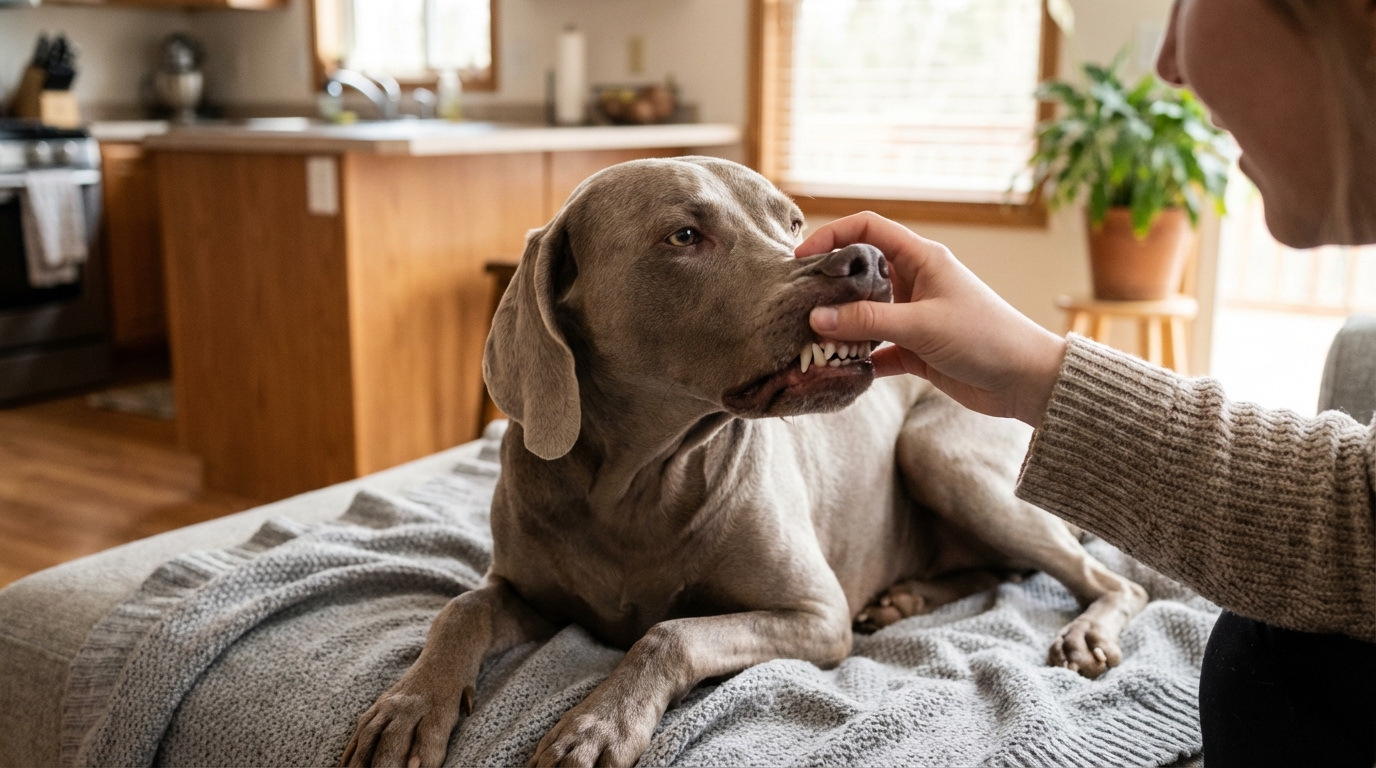
Step-by-Step: Brushing Your Dog's Teeth
Step 1 — Get your dog comfortable. Over the first few days, simply lift your dog's lip, touch the gums with your finger, and reward. No brush yet. This teaches your dog that mouth handling means treats.
Step 2 — Introduce the toothpaste. Let your dog lick a pea-sized amount of toothpaste from your finger. Most dogs treat this as a snack, which builds a positive connection to the flavor and texture.
Step 3 — Add the toothbrush. Apply toothpaste to the brush and gently lift one side of the lip. Brush in small circles along the gum line, focusing on the outer surfaces of the teeth — that's where tartar builds fastest.
Step 4 — Work in sections. Start with the large upper premolars near the back, then move forward to the canines and incisors. If your dog is calm, brush the opposite side. Aim for about 30 seconds per side.
Step 5 — Reward and release. End on a positive note every time, even if you only managed a few teeth. Consistency matters more than perfection.
Quick tip: If your dog pulls away, stop and try again later. Forcing the brush creates a negative association that makes future sessions harder. Short, happy sessions build long-term cooperation.
Over the course of one to two weeks, most dogs accept a full brushing session lasting under two minutes. Patience during the introduction phase pays off for the life of your dog.
How Often Should You Brush?
Daily brushing is ideal because plaque can harden into tartar in as little as 48 to 72 hours. If daily sessions aren't realistic, aim for at least three to four times per week to keep dental hygiene on track.
Dental chews and water additives can supplement your routine but should never replace brushing entirely. Think of them as bonus layers of protection between brushing days.
Pairing a consistent brushing schedule with preventive health products — like those available in our dog shop — helps you stay on top of overall wellness without breaking the budget.
Signs of Dental Problems to Watch For
Even with regular brushing, it helps to know what early dental trouble looks like. Keep an eye out for:
- Persistent bad breath — occasional odor is normal, but a strong, sour smell can signal infection.
- Red or swollen gums — healthy gums should be a uniform pink without bleeding.
- Yellow or brown buildup — visible tartar along the gum line means plaque has hardened.
- Dropping food or reluctance to chew — mouth pain often shows up at mealtime first.
- Excessive drooling or pawing at the mouth — these behaviors suggest discomfort that needs attention.
Catching these signs early gives you the best chance of addressing issues before they become serious. Regular at-home checks while you brush your dog's teeth double as a quick oral exam.
Frequently Asked Questions
Can I use a human toothbrush on my dog?
A soft-bristled human toothbrush can work in a pinch, but brushes designed for dogs have angled heads and softer bristles that fit a canine mouth more comfortably. Finger brushes are especially useful for smaller breeds or dogs new to the process.
My dog won't let me near his mouth — what should I do?
Start with short desensitization sessions. Touch the outside of the muzzle, then progress to lifting the lip, touching a tooth, and finally introducing the brush — rewarding each step. Most dogs come around within one to two weeks when the experience stays positive and pressure-free.
At what age should I start brushing my dog's teeth?
The earlier the better. Puppies who get used to mouth handling and brushing from a young age accept the routine much more readily as adults. That said, it's never too late to start — older dogs can learn to tolerate brushing with patient, gradual introduction.
Keeping up with your dog's dental hygiene is one of the easiest investments you can make in their long-term health. Browse our full range of dog health and wellness products to support your pup's care routine, and have a chat with your vet if you notice any signs of dental disease.