

Puppy socialization is one of the biggest behavior investments you can make early on—and timing matters more than most people realize. The first 16 weeks help shape how your dog feels about people, pets, places, and handling for years to come.
Below is how the puppy socialization window works, what to prioritize, and how to build real-world confidence while still protecting your puppy’s health.
Why the first 16 weeks matter
Young puppies go through a short learning phase where new experiences are more likely to be filed as “normal,” not scary. This is commonly called the puppy socialization window—also known as the socialization period or critical period. Many trainers describe it as closing around 16 weeks, which is why early, thoughtful exposure matters.
After that, learning still happens—but it often takes more repetition, more distance, and more careful setup. If your puppy only meets a narrow slice of the world early on (quiet home, same two people, same street), novelty later can feel threatening instead of interesting.
Good early socializing doesn’t mean forcing your puppy into overwhelming situations. It means creating lots of small, positive exposures that build calm confidence—especially around handling, other animals, and everyday sounds.
Credibility note: The American Veterinary Society of Animal Behavior (AVSAB) emphasizes that early socialization is essential to behavioral health, and that the benefits of controlled exposure during the socialization period can outweigh the risks when done thoughtfully and with veterinary guidance.
What to socialize: a simple checklist
Puppy socialization is less about “meeting everyone” and more about “learning the world is safe.” Aim for variety, not intensity, and keep sessions short.
- People variety: different ages, heights, voices, hats, sunglasses, uniforms, mobility aids.
- Friendly dogs: calm adult dogs and stable puppies with good play skills (not chaotic dog-park crowds).
- Other animals: cats behind a gate, small pets at a distance, birds, livestock smells (if relevant), always controlled.
- Handling: paws, ears, mouth, brushing, towel rubs, gentle restraint, being picked up (if size-appropriate).
- Places: quiet parking lots, sidewalks, store entrances, elevators, stairs, different floor textures.
- Sounds: vacuum, blender, doorbell, traffic, banging (start low volume and pair with treats).
- Being alone: tiny “practice absences” so separation doesn’t become scary later.
To make follow-through easier, set up a small “training tote” with rewards, a toy, cleanup essentials, and something to stand/sit on. If you’re gathering the basics for day-to-day routines, see our puppy supplies for general essentials that support training, handling practice, and consistency.
How to socialize safely without skipping exposure
Many owners delay outings because they’re worried about germs. The better approach is to socialize safely by choosing lower-risk setups while still getting the exposure that builds confidence.
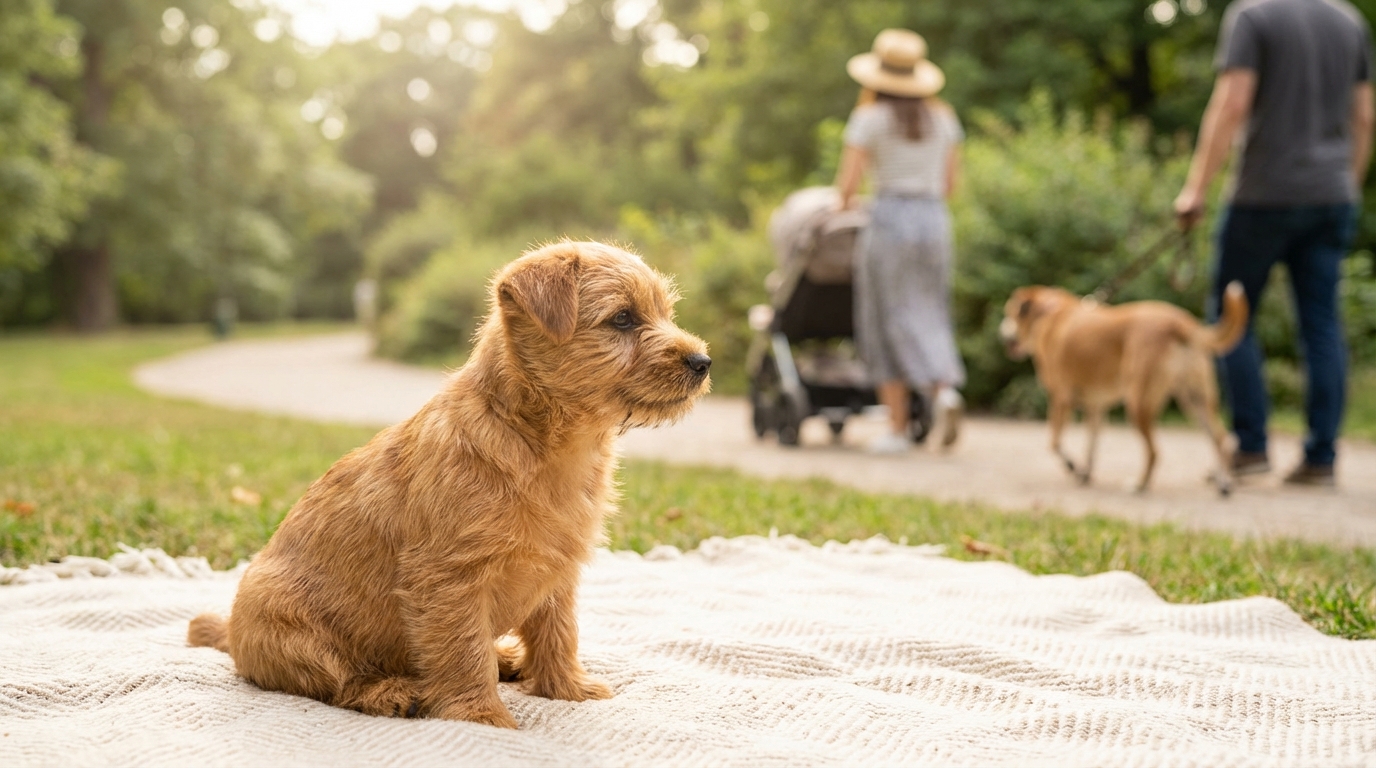
- Pick lower-risk locations: friends’ yards, clean home environments, or carried/stroller visits to busier areas where your puppy doesn’t touch high-traffic ground.
- Choose known dogs: meet healthy, calm dogs you trust rather than unknown dogs in crowded spaces.
- Keep sessions short: 5–10 minutes of great exposure beats 45 minutes that ends in stress.
- Watch body language: loose body, soft eyes, and curiosity are green lights; freezing, tucked tail, whale eye, or frantic pulling means add distance.
Quick tip: If your puppy hesitates, don’t lure them into the scary thing. Step back, reward calm, and re-approach at an easier distance so they learn they can feel safe and in control.
Vet-guided safety note: Your puppy’s vaccine schedule and local disease risk affect what “safe” looks like. Ask your veterinarian when your puppy can start walking in public areas, what to avoid until vaccines are complete, and how to reduce risks from illnesses like parvovirus while still getting valuable, controlled exposure.
Health protection is part of safe socializing too. Staying consistent with your vet’s recommended parasite prevention and doing quick coat/paw checks after outings can help prevent small issues from becoming big distractions. You can also build an at-home routine around brushing, wiping paws, and handling practice using everyday essentials from our puppy supplies section.
A realistic week-by-week approach
You don’t need perfection—just steady reps. Think “one new thing a day,” paired with treats and an easy exit plan. If your puppy seems tired or overwhelmed, do fewer things and make them easier.
- Weeks 8–10: gentle handling games (paws/ears), short car rides, meet 2–3 calm people, observe a quiet street from your arms or a clean blanket.
- Weeks 10–12: controlled dog meetups with a known friendly dog, walk on different surfaces (grass, gravel, mats), hear household sounds at low intensity.
- Weeks 12–14: brief visits to slightly busier spots (outside a store entrance, a playground at a distance), practice calm greetings, introduce grooming tools.
- Weeks 14–16: add mild challenges: umbrellas opening, joggers passing, gentle “mock vet” exams at home, short alone-time sessions in a safe space.
Keep a simple rule: new experience + high-value reward + quick retreat. That pattern teaches your puppy the world brings good things—and they can move away when they need to.
Common mistakes that create fearful adults
Most socializing problems come from good intentions and poor pacing. Avoid these common traps:
- Flooding: forcing your puppy to “get over it” (crowded events, being passed around). Overwhelm can create lasting fear.
- Uncontrolled greetings: letting strangers rush in or allowing face-to-face dog greetings on tight leashes.
- Too much too soon: stacking new experiences back-to-back until your puppy can’t cope.
- Missing handling practice: a puppy who never learns to accept touch may struggle with nail trims, brushing, and vet visits later.
- Ignoring recovery time: sleep is when puppies process learning; overtired puppies get mouthy and reactive.
A better goal than “friendly with everyone” is “neutral and confident.” Your puppy doesn’t need to greet every person or dog—they need to feel safe around them and able to focus on you.
Frequently Asked Questions
Can I socialize my puppy before vaccinations?
Yes—most puppies benefit from carefully managed socialization before their vaccine series is complete. The key is choosing lower-risk exposures (known healthy dogs, clean homes/yards, carried visits to observe the world) and avoiding high-traffic areas that your veterinarian recommends skipping until your puppy is fully protected. Ask your vet for a simple “yes/no” list based on your puppy’s vaccine schedule and risk factors.
How do I know if my puppy is getting enough socializing?
A well-socialized puppy recovers quickly after mild surprises and shows curiosity more often than avoidance. If you’re consistently exposing them to new people, sounds, surfaces, and handling in small positive doses, you’re on the right track.
What if my puppy seems scared during socializing?
Increase distance, lower the intensity, and reward calm behavior—then end on a win. Re-try later with an easier version of the same experience so your puppy learns confidence, not panic.
Is meeting lots of dogs the most important part?
No—quality beats quantity. A few calm, friendly dog interactions plus learning to ignore other dogs at a distance is often healthier than chaotic play with unknown dogs.
Want to make early training and routines easier? Browse our new puppy essentials to support safe outings, handling practice, grooming habits, and day-to-day confidence building—and check in with your veterinarian if you’re unsure what’s appropriate for your puppy right now.
References: American Veterinary Society of Animal Behavior (AVSAB) position statement on puppy socialization; American Animal Hospital Association (AAHA) canine vaccination guidelines.