

Choosing between wet vs dry cat food can feel like a daily tug-of-war: hydration and aroma on one side, convenience and cost on the other. Most vets don’t treat it as an either/or decision—your cat’s age, weight, teeth, and medical history matter more than the format. Below is a practical, clinical-minded guide to help you choose what fits your cat and your budget.
What vets prioritize when comparing cat foods
When vets evaluate a diet, they usually start with nutritional adequacy and your cat’s individual needs—not whether it comes in a can or a bag. Look for a statement on the label that the food is complete and balanced for your cat’s life stage (kitten, adult, senior). In practice, this often means the diet is formulated to meet recognized nutrient profiles (such as AAFCO) or has passed feeding trials—both are common ways manufacturers demonstrate the food provides essential nutrients at appropriate levels.
Next come the practical “real life” considerations: calorie control, hydration support, urinary sensitivity, dental health risk, and picky eating. Many cats do best with the option that helps them stay lean, consistently eat enough (but not too much), and maintain normal hydration.
It also helps to consider the whole routine, not just the bowl. Consistency matters for wellness basics like parasite prevention and regular checkups. Stocking essentials from the cat category can make it easier to keep care steady and avoid last-minute gaps.
Wet food: biggest benefits and tradeoffs
Wet food supports water intake. Many cats naturally drink less than you’d expect, and moisture-rich meals can help support normal hydration. Hydration can be a helpful part of overall urinary tract support in otherwise healthy cats, but it’s not a treatment. If your cat has diagnosed urinary disease (or recurrent urinary signs), follow your veterinarian’s plan, which may include a therapeutic diet.
Wet food is also usually very aromatic and palatable, which can help cats who are picky or have a reduced sense of smell. For some cats, wet food can make it easier to maintain a healthy weight because the added water often means fewer calories per gram. (You still need to portion by calories—more on that below.)
The tradeoffs are practical: wet food can cost more per day, spoils quickly after opening, and requires more cleanup. If free-feeding is part of your household routine, wet food generally works better as portioned meals rather than sitting out all day.
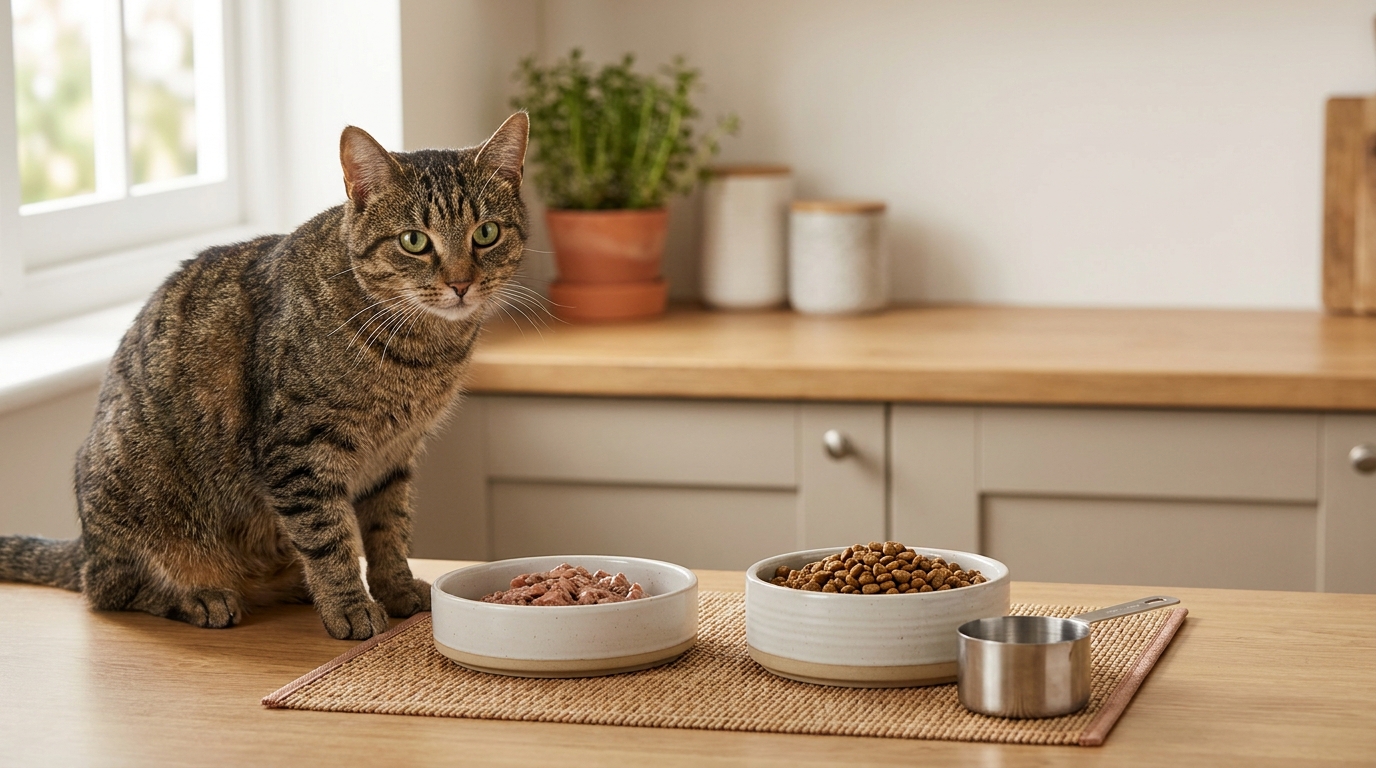
Dry food: biggest benefits and tradeoffs
Dry food is convenient and consistent. It’s easy to store, measure, and portion, which makes calorie control simpler—especially for multi-cat homes, timed feeders, and caregivers on a tight schedule. Dry diets are often more budget-friendly, and plenty of cats genuinely prefer the texture.
One common misconception: kibble’s crunch doesn’t reliably “clean teeth.” Some foods are designed with dental benefits in mind, but for most cats, dental health still comes down to genetics, home care, and professional evaluation. If teeth and gums are a concern, ask your vet about proven strategies like brushing and vet-recommended dental products rather than relying on kibble alone.
The biggest drawback is moisture: dry food contributes less water to the daily total. If your cat rarely drinks, you’ll want to be extra intentional about water access (fresh refills, multiple bowls) and consider adding wet meals or water-rich additions. For cats with urinary concerns, don’t guess—work with your veterinarian on a plan.
Quick tip: If you feed mostly dry, try offering one small wet meal daily and place water bowls away from food—many cats drink more when water isn’t right next to the feeding station.
Which type is best for your cat?
In many clinical conversations, the “best” choice ends up being the one your cat will reliably eat in the right amount while supporting healthy weight and hydration. That can be all-wet, all-dry, or (very commonly) a mix.
Wet may be a better fit if your cat is a low drinker, tends toward constipation, is prone to weight gain, or needs extra encouragement to eat. It may also be useful for seniors or cats who are finicky about aroma and texture.
Dry may be a better fit if you need simple portioning, use automatic feeders, have multiple cats with separate calorie goals, or your cat drinks well and maintains a healthy body condition on kibble.
Mixed feeding is often the practical middle ground. You get moisture and appetite support from wet food while keeping the convenience of dry. The key is to count calories from both formats so “a little extra” doesn’t quietly turn into weight gain.
Simple feeding plans (with a calorie example)
No matter which format you choose, portioning should be based on calories, not volume. Wet and dry foods can have very different calorie densities, and scoops and “fractions of a can” can mislead even careful pet parents. Use the label’s kcal per can, kcal per pouch, and kcal per cup (or kcal per gram) to do the math.
Plan A: Mostly wet, measured meals. Feed two to four small meals per day, refrigerate opened food promptly, and discard food that has been sitting out too long. This approach is helpful for cats who benefit from more moisture and for households that can stick to meal times.
Plan B: Mostly dry, with a wet “hydration meal.” Measure the day’s kibble into a container each morning so you don’t lose track. Add one wet meal (or a small portion) daily for moisture and variety—especially useful if you’re managing weight and want consistent portions.
Plan C: Mixed feeding with clear rules. Pick a calorie split (for example, 50/50) and keep it consistent for a couple of weeks before judging results. Keep treats modest, and if you use treats for training, subtract those calories from the day’s total.
Simple calorie example: Let’s say your cat’s daily target is 200 kcal/day (your vet can help set a goal based on ideal body condition). You want half the calories from wet and half from dry.
- Wet: 100 kcal/day. If the label says 90 kcal per can, that’s about 1.1 cans/day (roughly one can plus a small extra portion).
- Dry: 100 kcal/day. If the label says 400 kcal per cup, that’s 0.25 cup/day (a quarter cup total for the day, ideally measured with a real measuring cup or a kitchen scale).
This is exactly why calorie-based planning matters: a “little bowl of kibble” can add up fast. Recheck portions any time you change foods, since calorie density varies widely.
Whatever plan you choose, keep the rest of your wellness routine consistent too. It’s easier to stay stocked when you reorder essentials from the cat section along with your nutrition basics.
Frequently Asked Questions
Is wet food always better than dry food for cats?
No. Wet food can be helpful for hydration and palatability, but dry food can be a healthy staple when it’s complete and balanced for your cat’s life stage and portions are controlled. Many cats do best with a mix tailored to their appetite, body condition, and any veterinary guidance.
Does wet food prevent urinary problems?
Wet food can help support hydration, which may support normal urinary function in many cats. However, it isn’t a treatment for urinary disease. If your cat has urinary signs (straining, blood in urine, frequent trips, accidents, crying), contact your veterinarian promptly and follow any prescribed diet plan.
Will dry food clean my cat’s teeth?
Not reliably. Crunching kibble doesn’t consistently remove plaque below the gumline, and dental disease is common in kibble-fed cats. If oral health is a concern, ask your vet about brushing techniques and vet-recommended dental products.
What’s the simplest way to transition between food types?
Go slow over 7–10 days, mixing a small amount of the new food into the old and increasing gradually. This helps reduce stomach upset and food refusal, especially in sensitive or picky cats.
Ready to support your cat’s health beyond the bowl? Shop affordable essentials in our cat category, and if your cat has urinary, weight, or dental concerns, talk with your veterinarian about the best feeding approach.