

Wondering if an air-dried diet can really replace the freezer-and-thaw routine of raw? In this Ziwi Peak review, we’ll compare what you get (and what you give up) when choosing air-dried dog food instead of fresh raw. If you’re weighing the costs of Ziwi Peak-style air-dried food versus raw, plus convenience, safety, and nutrition, this breakdown will help you buy with confidence.
What “air-dried” really means (and why it costs more)
Air-dried dog food is gently dehydrated to remove moisture while aiming to keep the food more “whole” than standard high-heat kibble. The result is a shelf-stable product that looks like small, dense pieces rather than crunchy pellets. Because the moisture is removed, each piece is more calorie-dense than it looks, and you often feed less by volume.
Why does it cost more? You’re paying for higher meat inclusion, careful handling, and the reality that removing water concentrates nutrients (and ingredients) into a smaller bag. Many air-dried formulas also emphasize limited fillers, which can raise ingredient costs.
If your dog’s overall wellness plan includes protection from parasites, keep your routine consistent while changing diets. Browse our Nutrition & Diet content to build a smoother transition plan that supports digestion and steady energy.
Air-dried vs freeze-dried vs kibble: what’s actually different?
Many people shopping “raw-style” foods also compare air-dried dog food vs freeze-dried and kibble in the same search. They can all be complete diets, but the format affects handling, storage, and how you measure portions.
- Air-dried: Shelf-stable and dense. Usually fed as-is, often with smaller portions because calories are concentrated. Great for owners who want minimal prep.
- Freeze-dried: Also shelf-stable, typically lighter and more porous. Some dogs eat it dry; many owners rehydrate it for a softer texture and added moisture. Measuring can differ depending on whether you portion by cups or by weight.
- Kibble: Widely available and usually the lowest cost per calorie. It’s convenient and consistent, but ingredient profiles vary a lot—so quality depends on the formula, not just the format.
Takeaway: if your priority is “raw-like” convenience, both air-dried and freeze-dried can fit—just be sure you compare cost per day, not bag price, since serving sizes can be dramatically different.
Air-dried vs raw: nutrition, digestibility, and ingredients
In a Ziwi Peak review context, the biggest question is whether air-dried can deliver similar benefits—high animal protein, fewer carbs, and strong palatability—without the mess and strict handling. Air-dried diets typically use a high percentage of animal ingredients and have a firm, jerky-like texture that many dogs love. For picky eaters, that aroma and density can be a real advantage.
Raw diets can be highly customizable, but that flexibility comes with responsibility: balancing nutrients takes planning, and food safety routines matter. Air-dried foods are typically formulated to be complete and convenient, which appeals to owners who want a raw-style approach without daily prep, freezer space, and cleanup.
- Digestibility: Many dogs do well on meat-forward diets, but sudden switches can cause loose stool. Transition slowly and watch stool quality.
- Consistency: Air-dried is portionable and predictable; raw can vary batch to batch if you’re mixing ingredients.
- Ingredient transparency: Look for clearly listed organs and muscle meat, plus added vitamins/minerals that help round out the formula.
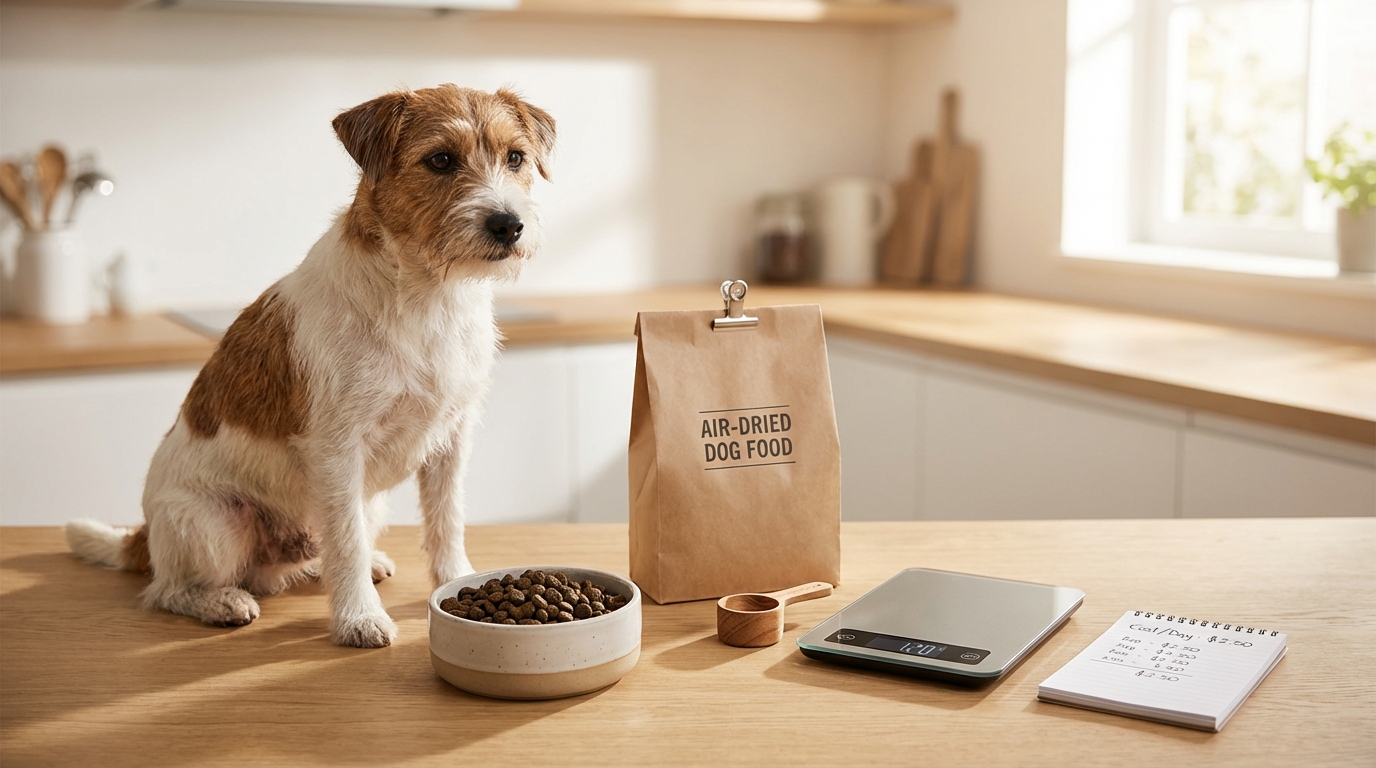
Quick tip: When comparing air-dried to raw, calculate your cost per day using the feeding guide (and calories, if listed), not the bag price. Air-dried foods are calorie-dense, so the daily portion is often smaller than you expect.
The true cost per day: a simple math check you can copy
Air-dried dog food can feel expensive at checkout, but a fair comparison is cost per day (or per 1,000 calories). The math is simple, and it helps you compare air-dried, raw, freeze-dried, and kibble on the same playing field.
Step 1: Estimate your dog’s daily calories. Needs vary by age, activity, and metabolism, but many moderately active adult dogs land in a broad range like:
- 30 lb dog: roughly 800–1,000 calories/day
- 50 lb dog: roughly 1,100–1,400 calories/day
Step 2: Use the food’s calorie density. Manufacturers may list this as kcal per cup, kcal per piece, or kcal per kilogram. If the label lists kcal per cup, you can do the math quickly:
- Example (30 lb dog): If your dog eats 900 kcal/day and the food provides 450 kcal/cup, then 900 ÷ 450 = 2 cups/day.
- Example (50 lb dog): If your dog eats 1,250 kcal/day and the food provides 500 kcal/cup, then 1,250 ÷ 500 = 2.5 cups/day.
Step 3: Convert servings into cost per day. Use the bag’s total cups (or total weight) and price. If a bag costs $100 and contains 20 cups, then it costs $5 per cup. Using the example above:
- 30 lb dog at 2 cups/day: 2 × $5 = $10/day
- 50 lb dog at 2.5 cups/day: 2.5 × $5 = $12.50/day
If the food lists calories per kilogram (or you prefer weighing portions), the approach is the same—just compute dollars per gram instead of dollars per cup. Either way, this is the clearest way to compare the day-to-day cost of air-dried versus raw.
If you currently buy raw plus storage containers, disposable gloves, and extra cleaning supplies, your true raw spend may be higher than the food receipt suggests. Air-dried can also reduce waste if you’ve been tossing thawed food that wasn’t eaten in time.
If you’re also budgeting for year-round parasite prevention, plan food upgrades alongside the essentials. Our Parasite Prevention section can help you prioritize what keeps your pet protected while you optimize diet.
Who should choose air-dried vs raw (and who shouldn’t)
Air-dried often fits best for owners who want a meat-forward diet with fewer logistical headaches. It can also work well for multi-pet homes where feeding routines need to be simple and repeatable. If you’ve been curious about air-dried versus raw but keep getting stuck on prep time, air-dried can be a practical middle path.
Raw may still be appealing if you’re committed to DIY customization and you enjoy the process. But it’s not automatically better just because it’s raw—success depends on consistent handling, a balanced plan, and a routine you can maintain long-term.
Important safety nuance: Raw feeding can carry a higher risk of pathogen exposure for people and pets compared with shelf-stable formats. That matters most in households with young kids, older adults, or anyone who is immunocompromised, and for pets who are immunocompromised as well.
Also check with your veterinarian before feeding raw (or making any major diet change) for:
- Puppies (growth needs are specific)
- Seniors
- Pregnant or nursing dogs
- Dogs with chronic disease or a history of pancreatitis, GI disease, or immune conditions
Air-dried may not be the best fit if:
- Your budget is tight: A consistent, high-quality kibble your dog thrives on beats an “on-and-off” premium diet.
- Your dog needs a very specific therapeutic diet: You may need more targeted options than general premium formulas.
- You tend to overfeed: Because portions are small, it’s easy to add “just a bit more” and creep up calories.
Feeding, storage, and safety tips that protect your budget
Whether you land on air-dried, freeze-dried, kibble, or raw, the goal is a plan you can follow every day.
- Air-dried: Keep the bag sealed, store it in a cool, dry place, and use a dedicated scoop to avoid introducing moisture.
- Freeze-dried: Reseal tightly to protect texture and freshness. If you rehydrate, discard leftovers promptly rather than “topping off” old food.
- Raw: Safe handling is non-negotiable. Treat it like any other raw meat: wash hands, clean surfaces promptly, and don’t leave food out longer than you’re comfortable with.
To keep transitions smooth (and avoid wasting expensive food), shift gradually over 7–10 days. Start by mixing a small amount into the current diet, then increase every couple of days if stools stay firm and your dog’s appetite remains steady. If your dog is sensitive, slow down rather than starting over.
Finally, measure portions. Air-dried dog food is dense, so eyeballing often leads to overfeeding. A kitchen scale can quickly pay for itself by preventing “extra handfuls” that burn through a bag faster than planned.
Frequently Asked Questions
Is air-dried food basically the same as raw?
Not exactly. Air-dried is processed to remove moisture and make it shelf-stable, while raw is typically kept frozen or refrigerated and fed fresh. Air-dried can feel “raw-like” in meat content and palatability, but it’s a different format with different handling needs.
How does air-dried dog food vs freeze-dried compare?
Both are concentrated, shelf-stable options often used as raw-style alternatives. Air-dried tends to be denser and is commonly fed as-is, while freeze-dried is often rehydrated for extra moisture. The best choice usually comes down to your dog’s preference, your storage habits, and which option gives you the best cost per day for your dog’s calorie needs.
Will my dog need smaller portions with air-dried diets?
Often, yes—air-dried pieces are calorie-dense because most of the water has been removed. Follow the feeding guide and adjust based on body condition, not bowl volume. If weight creeps up, reduce portions slightly and reassess after a couple of weeks.
Is the higher price worth it for picky eaters?
It can be, especially if you currently rely on costly toppers or rotate foods to keep your dog interested. Many owners find air-dried textures and aromas increase enthusiasm at mealtime. If you’re unsure, start with a small bag and track cost per day and leftovers.
If you’re ready to upgrade your dog’s routine without the raw-food hassle, explore our Nutrition & Diet resources and keep your protection plan steady in Parasite Prevention. If your dog has complex health needs, talk to your vet before making a major diet change.